Roof heating cables are safe when the cable is certified, installed to the maker's instructions, protected by a ground-fault device and wired by a Licensed Electrical Contractor where wiring is needed. Fires and shocks come from damaged cable, overlapped runs, debris, overloaded circuits or wet connections, not from the idea of warming a roof edge.
Are roof heating cables safe? The short answer
Roof heating cable is a common product and it can be used safely. It is also an electrical heater that lives outdoors, in wet and freezing conditions, at ladder height. That mix is why details matter.
There are two main risks. The first is shock, which comes from water and electricity meeting where they should not. The second is fire, which comes from heat building up where it cannot escape, from damaged insulation, or from wiring carrying more than it was built for. A third risk is easy to forget: a fall from a ladder while installing or checking cable at the roof edge.
Self-regulating cable lowers its heat output as it warms, which is one reason it is widely used on roofs. That helps, but it does not replace the other rules. A damaged or overloaded self-regulating cable still needs to be switched off and dealt with.
Is heat tape a fire hazard? What actually goes wrong
Heat tape fires have a short list of causes. Nearly all of them come from a departure from the instructions.
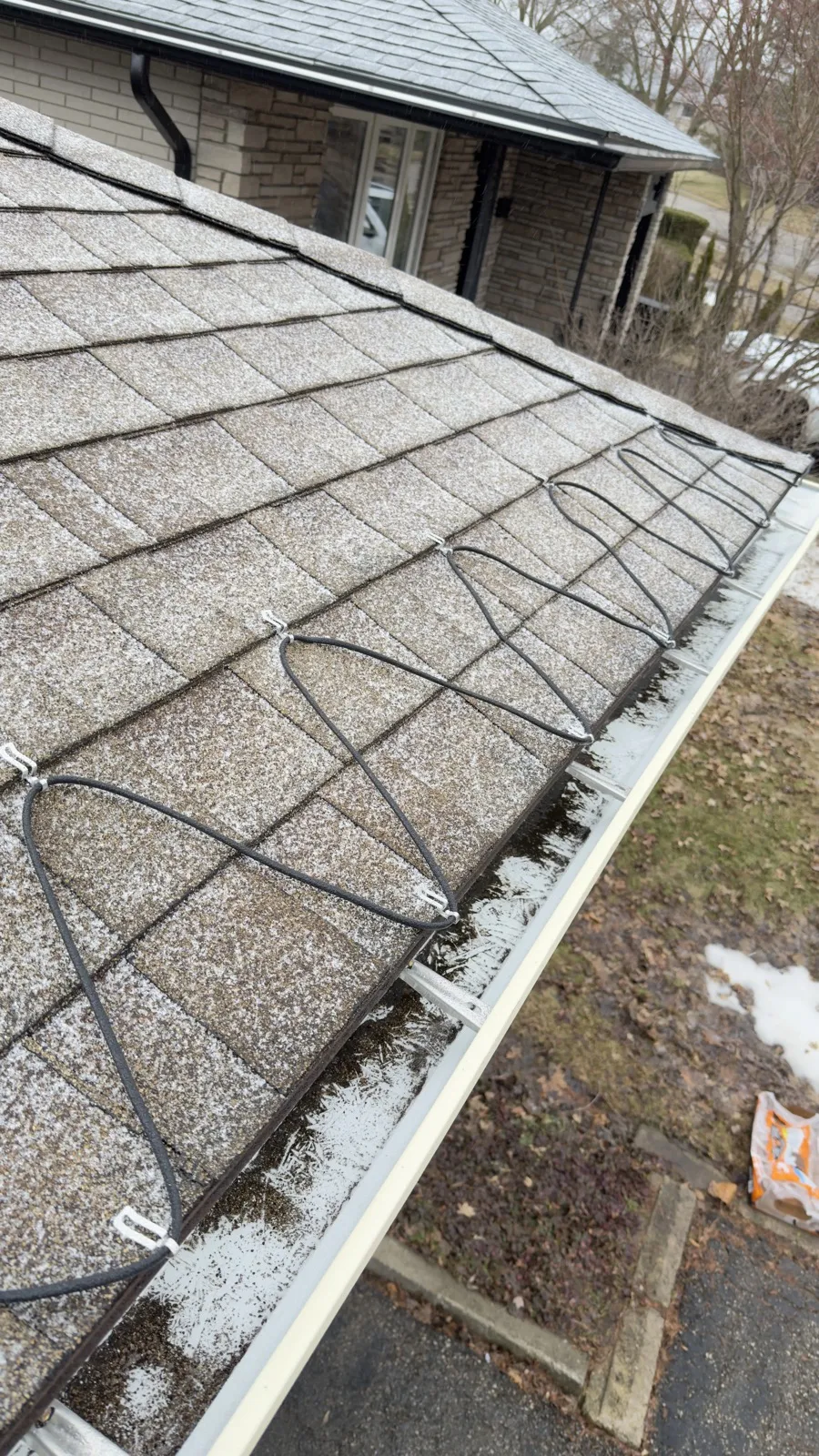
- Overlapped, crossed or bunched cable. Heat builds up where runs touch. Many makers forbid it and supply spacers to keep runs apart. Follow your manual.
- Damaged cable. Cuts, cracks, crushed spots and bare wire can come from clips, falling ice, ladders or an old brittle jacket. Makers say not to repair damaged cable, so replace it.
- Cutting or splicing with the wrong parts. Only cut cable that is made to be cut, and only finish it with the maker's approved kit.
- Cable under roofing, insulation or debris. Manuals typically say not to install cable under roof covering. Leaves and debris in an eavestrough also hold water against the cable and block the heat from doing its job, so clear them in fall.
- The wrong cable for the roof. A cable approved for shingles may not be approved for metal, shake or a flat roof. Read the label.
- An overloaded circuit or a thin extension cord. More load than the breaker or cord can carry heats the wiring, not the roof.
- Water in a connection. An unsealed splice or end seal, or an outlet without a weatherproof cover, lets moisture reach live parts.
Age matters less than condition. Cable that has been in service for many seasons should be judged by what it looks like, not by a date.
Does heat tape need to be GFCI protected?
Yes, in practice. Cable makers' instructions require a ground-fault protected outlet or breaker, and the electrical code calls for ground-fault protection on electric heating cable circuits. The Electrical Safety Authority recommends ground fault circuit interrupters (GFCIs) on outdoor outlets, with weatherproof covers to keep moisture out.
It helps to know there are two kinds of protection. A GFCI protects people: it trips on a tiny leak of current, the kind that gives a shock. Ground-fault equipment protection is set higher so normal operation continues, and it guards against arcing faults in the cable that could start a fire. Which one a circuit needs depends on the product and the installation, and the manual and the electrician decide.
Test the outlet each fall. Press the test button, confirm it trips, then press reset. If a protected circuit trips again and again once the cable is running, do not keep resetting it. Switch the cable off and have a Licensed Electrical Contractor look at it. It is often a sign of moisture in a connection or damaged cable. Our post on maintaining heated wires after installation covers the yearly check.
Does heat tape need a dedicated circuit?
Often, and the reason is practical. Heating cable draws power for hours during a storm, the same time other loads such as the furnace and space heaters are working. Share the circuit and the breaker may trip in the middle of the storm, when you need the cable most. Some makers advise against sharing, and long runs may need to be split across more than one circuit.
The electrician works from the cable's maximum length per breaker size and the total load. Here is how the jobs divide:
- A plug-in system uses a protected exterior outlet within reach of the cable's own cord.
- A dedicated circuit, hardwiring and controls are electrical work done by a Licensed Electrical Contractor under ESA rules.
If you use an extension cord at all, the ESA says it must be rated for outdoor use and plugged into a GFCI outlet. Many heating cable manuals add limits of their own, and some do not allow one. Check yours.
Do heat tapes have a thermostat?
Not usually. Cable sold for roofs normally has no built-in thermostat, though cable sold for water pipes often does. A plain plug-in roof cable is on whenever it has power.
Self-regulating cable changes its heat output with temperature, but it is not an on and off switch. Add a thermostat, a temperature plus moisture sensor, or a timer if you want the cable to run only when it is needed. Less run time means less power, less wear and fewer hours of exposure.
Keep the roles straight. A control saves energy. It is not what protects you from a shock or a fault. That is the job of the ground-fault device, the right cable and the right installation.
Who should install it, and what to check before you switch on
The ESA says the only way to be sure electrical work is safe and legal is to hire a Licensed Electrical Contractor. A licensed contractor files the notification of work with the ESA, and you can verify a licence through the ESA's contractor lookup. The ESA recommends an LEC for permanent outdoor wiring and outlets.
Ontario homeowners may do electrical work in their own home, but the ESA requires a notification before starting and a review of the work when it is done. Friends, relatives and neighbours cannot do it for you. Plugging a product into an existing protected outdoor outlet is a different thing from adding wiring.
Before you switch any system on, check these:
- A recognized certification mark, such as CSA or cUL, on the cable and the controls.
- The cable is approved for your roof material and gutter type.
- Clips and spacers are used as directed, with no runs touching or crossing.
- Connections and end seals are made with the approved kit and are watertight.
- The outlet or breaker is ground-fault protected and tested.
- The manual is kept, and the circuit is labelled at the panel.
D&D Snow Services installs roof and gutter heating cable. Electrical connection work is for a Licensed Electrical Contractor, and the estimate states who handles that part. Our post on heated cable systems for ice dam prevention explains what the cable can and cannot do.
Heating cable safety questions
Are roof heat cables dangerous?
Not when they are certified, installed to the instructions and ground-fault protected. The danger comes from damage, overlapped runs, wet connections, overloaded circuits and cable used on the wrong roof. Inspect from the ground each fall and replace anything that looks cracked, cut or bare.
Can damaged heating cable be repaired?
Do not patch it with tape or a home repair. Makers say not to repair damaged cable, and continuing to use cable that has been cut or damaged can cause shock or fire. Switch it off, replace the damaged cable, or ask a Licensed Electrical Contractor about the approved parts for your product.
Can I install roof heating cable myself?
Plug-in kits exist, and the manual must be followed exactly. Any new wiring is electrical work, and the ESA says a Licensed Electrical Contractor is the only sure way to get it safe and legal. Working at the roof edge from a ladder in winter is also a fall risk.
Is it safe to use an extension cord with heat tape?
Only if the manual allows it, and then with care. The ESA says outdoor extension cords must be rated for outdoor use and plugged into a GFCI outlet. A thin or indoor cord can overheat under the cable's load. The safest plan is an outlet within reach of the cable's own cord.
Ready for a Reliable Winter Season?
D&D Snow Services covers Kitchener, Waterloo, Cambridge, Guelph and surrounding region.
Get a Free Snow QuoteKey Takeaways
- Roof heating cable is safe when it is certified, installed to the instructions, ground-fault protected and wired by a Licensed Electrical Contractor.
- Fire and shock come from damage, overlapped runs, debris, wet connections and overloaded circuits or cords.
- Ground-fault protection is needed: a GFCI protects people, and ground-fault equipment protection guards against fire.
- A dedicated circuit is often wise. Hardwiring, new circuits and controls are electrical work for an LEC.
- Inspect from the ground each fall, test the GFCI and replace damaged cable instead of repairing it.
Sources & References
Request snow-service details
Identify the clearing areas, access priorities and seasonal or per-visit needs.
Prefer to send the details first? Request a quote or call (519) 501-5003.