Heat tape and heat cable are two names for the same thing: an electric heating cable that keeps a channel open so roof meltwater can drain. Heat cord, heat wire and roof deicing cable are more labels for it. Heat trace is the industry term for the pipe version. The name matters less than whether the product is made and rated for a roof edge and eavestrough.
Heat tape vs heat cable: are they the same thing?
For a roof, yes. Heat tape is the everyday name for an electric heating cable, and shops, installers and homeowners use the two terms as if they were one. Despite the word tape, the roof product is a cable that you clip along the edge of the roof. These are the names you will run into:
| Name you will see | What it usually means |
|---|---|
| Heat tape | Everyday name for an electric heating cable, sold for roofs, gutters or pipes |
| Heat cable, heating cable | The plainer name for the same product |
| Roof heat cord, heat wire for roof | Casual terms, usually meaning roof and gutter cable |
| Roof warming cables, roof deicing cable | Product names for cable that keeps meltwater paths open at the roof edge |
| Heat trace | Industry term for cable run along pipes and process lines to stop them freezing |
| Driveway heating wire or mat | A different product, set in or under paving |
So do not shop by the word on the box. Ask what the product is rated to do and where the manual says it can go.
Heat trace vs roof heating cable: why pipe products do not belong on a roof edge
Heat trace is the term a plumber, building operator or industrial supplier uses for cable laid along a pipe. It is usually fitted snug against the pipe and covered with insulation, and a thermostat watches the pipe or the air around it. The goal is to keep water inside the pipe above freezing.
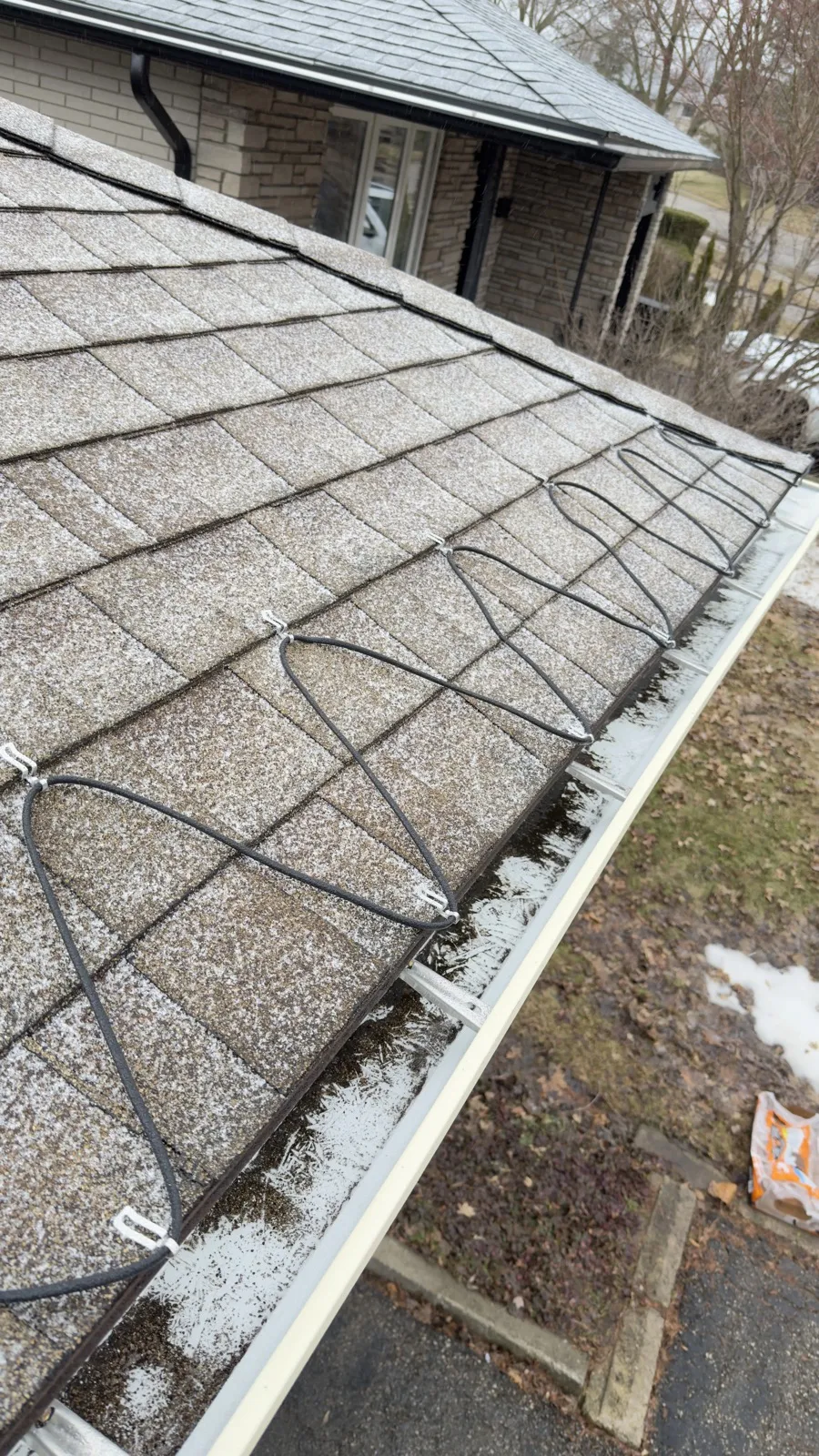
A roof edge is a different job. The cable sits out in sun, wind, snow and ice. It is zigzagged along the lowest part of the roof, laid along the eavestrough and run down the downspout. It does not keep anything above freezing. It keeps a path open so meltwater can leave the roof instead of refreezing at the eave.
That is why the products are built, labelled and attached differently. Use a product whose label and manual say it is for roofs and gutters, and keep pipe tape for pipes. A pipe product may not be rated for open outdoor exposure or for sitting against roofing, and it will not come with roof clips. If the label does not mention roofs, do not assume it is fine, and follow the manufacturer's instructions. Our post on preventing pipe freeze with heat trace cables covers the pipe side.
Self-regulating or constant wattage: the difference inside the cable
Roof and gutter cable comes in two main kinds, and the kind matters more than the name.
| Type | How it behaves | Watch for |
|---|---|---|
| Self-regulating | Adjusts its heat output to the temperature, giving more heat when it is colder and less when it warms | Still draws power while energized, so it still needs a sensible control |
| Constant wattage | Gives the same output along its whole length whenever it is powered | Needs a thermostat or sensor, and must not touch or cross itself |
The crossing rule is not a detail. The National Research Council of Canada warned in a building digest that if cable becomes twisted and overlaps, the insulation can melt at the overlap and cause a short circuit. Your manual says whether crossing is ever allowed for your cable, and the layout should be planned so it never comes up.
Ready-made kits are sold as a fixed length of cable with a cold lead and a plug, and the box may say only "heat cable". Check which type is inside, because it decides how the cable is controlled and laid out.
Roof cable vs driveway heating wire
Some of the same words, heat wire and heating cable, also describe snow-melting systems for driveways and walkways. Those are built to be embedded in concrete or asphalt, or set under pavers, where they warm the surface from below. They are made for a slab and for being covered, which is the opposite of an exposed roof edge.
Do not use roof cable on a driveway or driveway cable on a roof. Each is rated for its own setting. If you are weighing a heated driveway, see our post on heated driveway wires in Ontario. For pipes under a driveway or in a garage wall, that is heat trace territory again.
What to ask for when you buy roof heating cable
Use this list whether you are comparing retail kits or reading a quote.
- Labelled for roofs and gutters. The packaging or manual should say so in words, not just show a house on the front.
- The type. Self-regulating or constant wattage, and what the manual says about crossing and overlap.
- Length for the layout. Cable runs in a zigzag along the eave and through the eavestrough and downspout. The length comes from that layout, not from a guess.
- Control. A plug and a switch, a thermostat, or a temperature plus moisture sensor. Control decides how many hours it runs.
- Attachment. Clips that suit your roof material. Check with the installer or the roof maker before fastening anything through metal panels.
- Power. A plug-in cable needs a protected outdoor outlet. The Electrical Safety Authority advises ground fault circuit interrupters on outdoor outlets. A dedicated circuit, hardwiring and controls are electrical work for a Licensed Electrical Contractor under ESA rules.
Our post on roof deicing cable and drainage routes lists what to photograph and describe before you ask for a quote.
What heating cable will not do
Whatever it is called, roof cable melts channels in the ice. It does not melt the whole roof, and it will not clear a large ice dam that has already formed. Natural Resources Canada says it uses a significant amount of electrical energy and puts sealing attic air leaks and insulating thoroughly first for ice dam prevention. Cable manages the symptom at the eave. See our post on roof heating cables for ice dam prevention for where it fits in a plan.
Turn it on before the storm, not after the ice is built. If you already have a thick ridge of ice at the eave, that is a job for ice dam removal, not for plugging in a cable. If you want a system laid out for your eaves and downspouts, D&D Snow Services installs roof and gutter heating cable, and the estimate says who handles the electrical connection.
Heat tape and heat cable questions
What is heat tape for roofs?
Heat tape for roofs is an electric heating cable clipped along the lower edge of the roof and run through the eavestrough and downspout. It does not melt the whole roof. It keeps a path open so meltwater can drain instead of refreezing at the eave and building into an ice dam.
What is heat tape for gutters?
It is the same cable laid lengthwise in the eavestrough and carried down the downspout so meltwater has a channel to follow. Look for a product labelled for roofs and gutters, with an outdoor-rated plug or lead. A pipe product is not the same thing.
Is heat tape the same as heat trace?
They are close cousins. Both are electric heating cable. Heat trace is the term for cable along pipes and process lines, usually under insulation and controlled by a pipe or air thermostat. Roof cable sits exposed on shingles or metal and in gutters. Buy the one whose label matches the job.
Can I use pipe heat tape on my roof or gutters?
Only if the manufacturer says that exact product is made for roofs and gutters. Pipe tape may not be rated for roof exposure, may not suit the clips and layout a roof needs, and its instructions are written for pipes. If the label does not clearly allow it, do not use it.
Are roof warming cables and roof deicing cable different products?
Usually not. Roof warming cables, roof deicing cable, heat cord and heat wire are marketing and search terms for cable that keeps drainage paths open at the roof edge. Compare the type, length, control and rating on the label rather than the product name.
Ready for a Reliable Winter Season?
D&D Snow Services covers Kitchener, Waterloo, Cambridge, Guelph and surrounding region.
Get a Free Snow QuoteKey Takeaways
- For roofs, heat tape and heat cable are the same product: an electric heating cable clipped along the eave and run through the eavestrough and downspout.
- Heat trace is the industry name for cable on pipes. Buy a product labelled for roofs and gutters for a roof edge.
- Know the type. Self-regulating cable adjusts to temperature, and constant-wattage cable must never cross or overlap itself.
- Cable keeps a drainage path open. It will not clear a thick ice dam or replace attic insulation and air sealing.
- Outdoor outlets should be ground-fault protected, and hardwired or dedicated-circuit work belongs to a Licensed Electrical Contractor.
Sources & References
Request snow-service details
Identify the clearing areas, access priorities and seasonal or per-visit needs.
Prefer to send the details first? Request a quote or call (519) 501-5003.