No, a new roof does not stop ice dams. Ice dam roofing work, such as a self-sealing membrane along the eaves, can keep backed-up water from leaking into the house, but the dam still forms. It forms because heat from the house warms the roof deck, melts the snow above it and sends water to a cold eave, where it refreezes. Stopping the dam means keeping the roof cold or keeping a drainage channel open.
Why a new roof does not stop ice dams
An ice dam is a heat problem, not a shingle problem. Warm air leaks from the living space into the attic. That heat warms the roof deck, and the snow lying on it melts from underneath. The meltwater runs down the slope until it reaches the eave, which overhangs the wall and has no heated room beneath it. There the water refreezes and builds a ridge of ice. Water that arrives later pools behind the ridge and creeps up under the shingles.
A new roof changes none of that. The attic is the same, the air leaks are the same and the eave still overhangs the wall. Fresh shingles shed water well, but they sit on the same warm deck.
Natural Resources Canada says prevention starts with sealing every attic air leak and insulating thoroughly. It also notes that a well-sealed, insulated attic stays cool and generally does not grow ice dams. Trouble tends to show up when heat leaks unevenly, for example around a chimney, a pot light, an attic hatch or a duct run. One stretch of roof melts while the eave stays cold, and the water has nowhere to go.
Ice dam protection versus ice dam prevention
People use these two phrases as if they mean the same thing. They do not.
Ice dam protection limits the damage when a dam forms. The usual form is a self-sealing waterproof membrane, often sold as ice and water shield, laid on the roof deck under the shingles along the eaves and in valleys. It seals around the nails and stops water that backs up under the shingles from reaching the sheathing. Natural Resources Canada makes the same distinction: a membrane keeps water from leaking through the sheathing, but ice can still build up on top of it.
Ice dam prevention removes the cause. It means keeping the roof deck cold by sealing air leaks, adding insulation and letting air move through the attic from soffit to ridge. Our posts on attic insulation and ice dams and attic ventilation and ice dams cover that side in detail.
A re-roof is a good moment to add protection and to check the venting. It is not a stand-in for prevention. Put these questions to any roofer before you sign:
- How far up the slope does the eave membrane run, and does it also cover valleys and low-slope sections?
- Will the soffit vents stay open, and are baffles used so insulation cannot block them?
- Is there enough exhaust vent at or near the ridge to keep air moving?
- Do the bathroom fans and range hood vent outdoors rather than into the attic?
- What does the written warranty say about water damage from ice dams?
Is ice damming the roofer's fault?
Usually not. A well-built roof can still grow ice dams, because the cause sits below the roof deck: heat loss, snow depth and a cold eave. Most roofing contracts cover shingles, underlayment and flashing. Attic insulation and air sealing are normally a separate trade.
There are cases where the roofer does share responsibility. Look for these:
- Eave membrane was promised in the quote but not installed, or it stops too close to the edge.
- New roofing or insulation has covered the soffit vents, or baffles were left out so air cannot flow.
- Vents were removed during the job and not replaced.
- Leaks show up at a chimney, skylight, valley or wall junction during summer rain as well as in winter. That points to flashing, not ice.
The pattern helps you tell them apart. Stains along an exterior wall, with ice at the roof edge after heavy snow and a cold snap, point to an ice dam. A drip during a July thunderstorm is a roofing defect. Read the contract and the warranty wording on ice dams before you call anyone, and ask the contractor to look at the attic as well as the roof. If there is a real dispute over who owes what, get advice on your own contract. A blog post cannot settle that.
Do ice dams damage shingles and cause roof damage?
Yes, though water does most of the harm, not the ice sitting on the shingles. Water backed up behind a dam can seep under shingles, through nail holes and into the roof deck. From there it wets insulation, stains ceilings and the tops of walls, and it can leave mould or rot if it happens year after year.
The ice itself causes harm in two ways. Its weight can bend eavestroughs and pull them off the fascia. And attempts to chip it off with a hammer, axe or shovel can crack shingles, strip granules and dent metal. D&D Snow Services removes ice dams with low-pressure steam instead, which cuts channels through the ice and lets the water drain without striking the roof.
On insurance, the Insurance Bureau of Canada says standard home policies typically cover sudden and accidental water damage from ice dams, while repeated damage can be treated as a maintenance issue. Read your own policy and keep dated photos. Our post on ice dam roof damage and insurance claims in Ontario walks through the usual steps.
Ice dam roofing versus attic work, heating cable and steaming
Each option does a different job. Here is how they compare.
| Option | What it does | What it does not do | Choose it when |
|---|---|---|---|
| Re-roof with eave membrane | Limits leaks through the roof deck at the eave | Stop the dam from forming | The roof is due for replacement anyway |
| Attic air sealing, insulation and venting | Keeps the deck cold, which removes the cause | Clear a dam that is already there | Dams return on the same eaves each year |
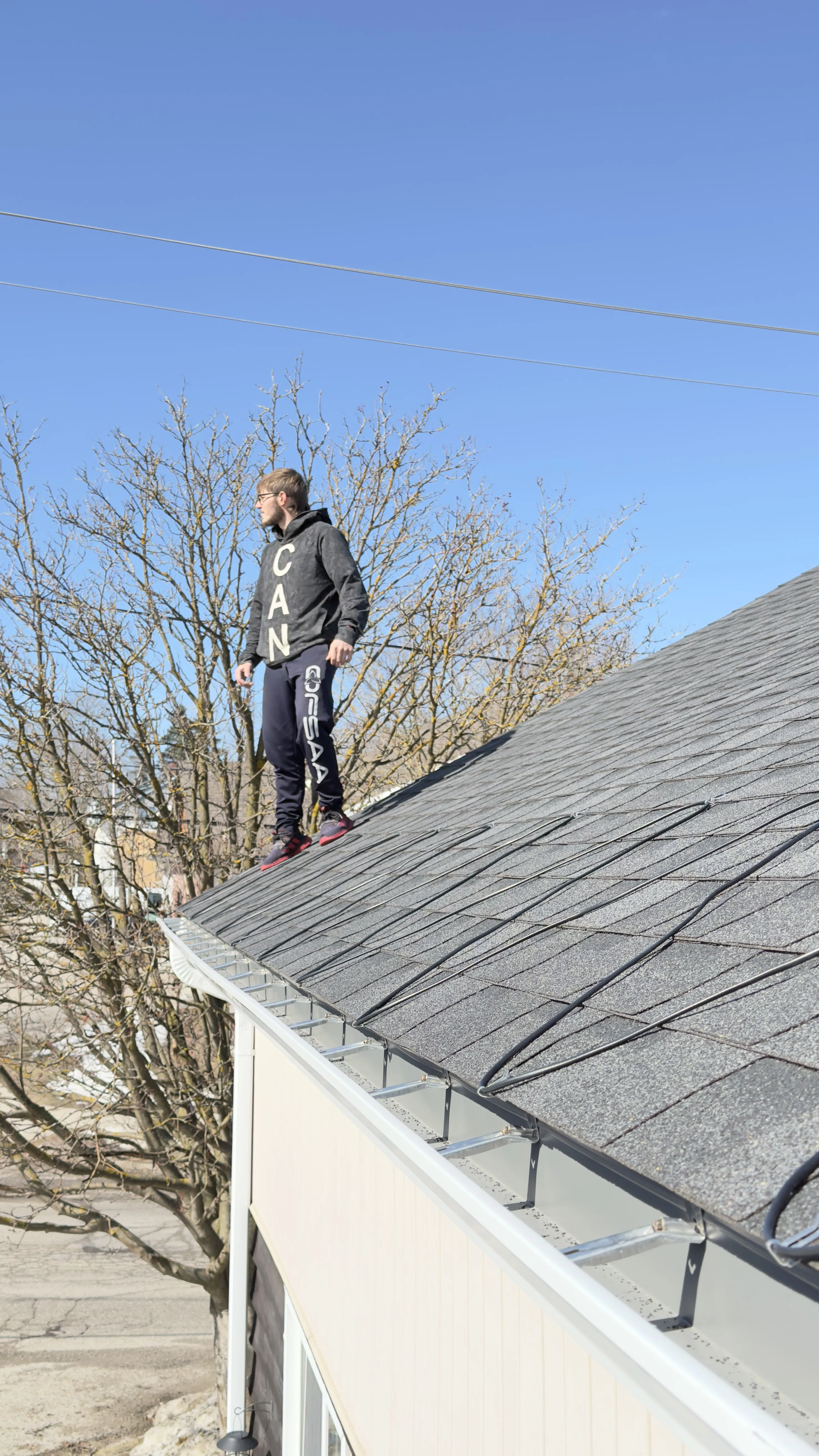
| Heating cable | Keeps a drainage path open through the ice | Melt the whole roof or fix attic heat loss | Attic work is not possible yet, or only a few eaves are affected |
| Ice dam steaming | Opens channels in an existing dam without hammering | Prevent the next dam | Water is coming in now |
| Roof raking from the ground | Takes snow off the lowest roof edge so there is less to melt | Cure the heat loss | Right after a heavy snowfall, before a thaw |
Choose attic work if the same eaves ice up every winter, your upstairs ceilings feel warm or you see frost on the underside of the roof deck. Choose a re-roof for the age and condition of the shingles, and treat eave membrane as a bonus. Choose roof and gutter heating cable when you need drainage kept open at a few trouble spots. Cable keeps a channel clear, but Natural Resources Canada notes that it uses a significant amount of electricity. Choose ice dam removal when water is already getting in.
The strongest fix is a combination: attic work for the cause, with raking or cable as backup through the years it takes to finish.
What to do first in an Ontario winter, and what to plan for fall
Dams usually show up in mid to late winter, when deep snow sits on the roof and a run of below-freezing nights follows milder, sunny days. Heavy wet snow and freeze-thaw cycles in Waterloo Region make that pattern common.
If water is coming in now, work in this order:
- Move belongings out of the wet area and catch drips. Photograph the damage with the date.
- Clear snow from the lowest part of the roof with a roof rake used from the ground. Do not climb a snowy or icy roof.
- Have the dam opened with steam by someone insured to work at height. Avoid hammers, picks and torches.
- Tell your insurer about sudden water damage, as your policy directs.
Then plan the lasting fix for the fall, when the attic is easier and safer to work in. Ask an insulation or energy-audit contractor to look at air leaks, insulation depth at the eaves and the vent path. If a re-roof is already due, fold the membrane and venting questions from earlier into that quote. If only a couple of problem eaves remain afterwards, heating cable installed before the first snow can cover them.
Ice dam questions Ontario homeowners ask
What is ice dam protection on a roof?
Ice dam protection usually means a self-sealing waterproof membrane under the shingles along the eaves and valleys. If water backs up behind a dam, the membrane stops it from getting through the roof deck. It limits leaks. It does not stop the ice from forming, so it works best alongside attic air sealing, insulation and ventilation.
What is the best ice dam prevention?
Keeping the roof deck cold is the most reliable prevention. That means sealing air leaks from the house into the attic, insulating well, especially near the eaves, and letting outside air flow from soffit to ridge. Raking snow from the lower roof and using heating cable at problem eaves are useful backups, not substitutes.
Is it worth replacing the roof to stop ice dams?
Not on its own. Replace a roof because the shingles are worn or damaged. A new roof with eave membrane will leak less during a dam, but the dam will still form if attic heat is unchanged. If you are re-roofing anyway, use the job to add membrane and fix blocked soffit vents.
Can a roofer stop ice dams from coming back?
A roofer can add eave membrane, correct flashing and open or add vents, and all of that helps. Most roofers do not insulate or air seal attics, which is where the cause sits. Ask for a plan that covers both the roof and the attic, or bring in an insulation contractor alongside the roofer.
Ready for a Reliable Winter Season?
D&D Snow Services covers Kitchener, Waterloo, Cambridge, Guelph and surrounding region.
Get a Free Snow QuoteKey Takeaways
- A new roof or eave membrane limits leaks, but it does not stop an ice dam from forming.
- The cause is attic heat reaching the roof deck, so air sealing, insulation and ventilation come first.
- Roofers are rarely to blame for dams, but check for missing eave membrane, blocked soffit vents and faulty flashing.
- Steaming and heating cable deal with the symptom, and roof raking cuts the snow that feeds the dam.
- Replace a roof for its age and condition, not to cure ice dams.
Sources & References
Request snow-service details
Identify the clearing areas, access priorities and seasonal or per-visit needs.
Prefer to send the details first? Request a quote or call (519) 501-5003.