Gutter guards do not cause ice dams. A dam forms when heat from the house melts roof snow that refreezes at the cold eave, whether the home has gutters, gutter guards or no gutters at all. Guards can still hide ice in the trough and make it harder to clear, so fix the heat loss first and keep the roof edge able to drain.
Do gutter guards cause ice dams?
No. The gutter, with or without a guard, is where you notice the problem, not where it starts. An ice dam begins in the attic. When the attic is warm, it heats the roof sheathing from below and melts the layer of snow in contact with the roof. The meltwater runs down the slope until it reaches the overhang, which sits outside the heated part of the house and stays below freezing. There it refreezes and builds a ridge.
Natural Resources Canada describes it the same way. Melting snow meets the ice mass at the lower edge of the roof, backs up and can run under the shingles and into the attic. The agency also points out that the overhang is hard to insulate, so the thin spot just above it is a common place for snow to melt.
Homeowners often connect guards with dams because the two show up together. The guard goes on in a calm autumn, and the first heavy snow of winter brings the first dam. The guard did not change the attic. A cold snap, a deep snowpack, or a thaw followed by a freeze did what they always do to a house that leaks heat into its roof.
Can you get ice dams without gutters?
Yes. Take the gutters away and the roof still has an overhang that is colder than the slope above it. Meltwater still refreezes at the edge, a ridge still forms, and water can still back up under the shingles. A house with no eavestroughs is not safe from dams.
What changes is where the ice ends up. Without a trough to catch the water, it drips straight off the edge. You may see long icicles, ice built up on steps and walkways under the eaves, and frozen patches on the ground by the foundation. Those are slip hazards, and they can drop a lot of weight in one piece when they let go.
Gutters, then, are neither the cause nor the cure. They are one part of the drainage path. The heat loss decides whether the dam forms.
Why ice dams form on gutters and eaves
Think of it as a chain. Break any link and the dam gets weaker.
- Heat from the living space leaks into the attic through gaps and thin insulation.
- The warm roof deck melts the bottom layer of snow, even though the air outside is below zero.
- Meltwater runs down to the overhang, where the roof is cold.
- It freezes at the edge, in the gutter and on the shingles just above it.
- The frozen band grows. New meltwater pools behind it.
- The pooled water finds a way under the shingles and into the attic or the wall.
The eavestrough is part of step four. A gutter full of meltwater turns into a block of ice, and the ice adds to the ridge and holds the water back. The trouble is made worse by a gutter that was already full of leaves and grit. Clear gutters give the water somewhere to go. Our article on eavestrough ice buildup goes through what to look for.
Ice dam vs frozen gutter: how to tell which you have
People use the two terms for the same thing, but they are different problems that can occur together.
| Frozen gutter | Ice dam | |
|---|---|---|
| Where the ice sits | Inside the trough and downspout | On the roof surface at and above the edge, often with the gutter below |
| What it blocks | Drainage from the gutter | Meltwater running off the roof |
| Typical signs | Overflow, icicles hanging from the front lip, ice in the downspout | A ridge of ice on the shingles, icicles along the eave, wet stains on ceilings or exterior walls |
| Main risk | Weight on the gutter, spills onto walkways | Water under shingles and into the house |
| Root cause | Blocked or slow drainage, shaded or exposed runs | Heat loss into the attic |
If you are not sure, look at the roof edge from the ground. Ice that rises above the front of the gutter and sits on the shingles is a dam. For a fuller look at the roof side, see how gutter ice dam prevention works for Ontario homes.
How gutter guards can make winter ice harder to deal with
Guards do not cause the dam, but they can change how ice looks and how easy it is to fix. The details depend on the design, so treat these as things to watch for rather than rules.
- Hidden ice. A screen or cover hides the trough. A gutter can be packed with ice for days before water overflows and you notice.
- Ice on top of the guard. Meltwater that cannot get through a frozen mesh or slot runs over the front lip and builds icicles.
- Debris still collects. Fine grit, seeds and shingle granules can build up on or under guards. A clogged trough freezes full.
- Harder access. It is harder to chip, steam or flush ice from a covered gutter. It can also complicate adding heating cable in the trough.
If you have a guard, check the manufacturer's instructions before running heating cable under it, and before taking off any piece of it in winter. Removing a guard from an icy eave to chase a dam will not stop the dam and puts you on a ladder at the worst time of year.
What helps homes with gutter guards, gutter covers or no gutters
The same fixes apply in all three cases, because the cause is the same.
- Stop the heat loss. Natural Resources Canada advises sealing attic air leaks and insulating thoroughly. Hatches, recessed lights, bath fan ducts and plumbing stacks are common leak points. See the notes on attic insulation and ice dams.
- Ventilate the attic. Good airflow keeps the roof deck cold. It works as a second line of defence after air sealing, and attic ventilation is worth checking if the insulation is already good.
- Rake the lower roof edge from the ground after heavy snow to reduce the load that feeds a dam.
- Clear the gutters and downspouts in the fall, and check guards for debris before freeze-up.
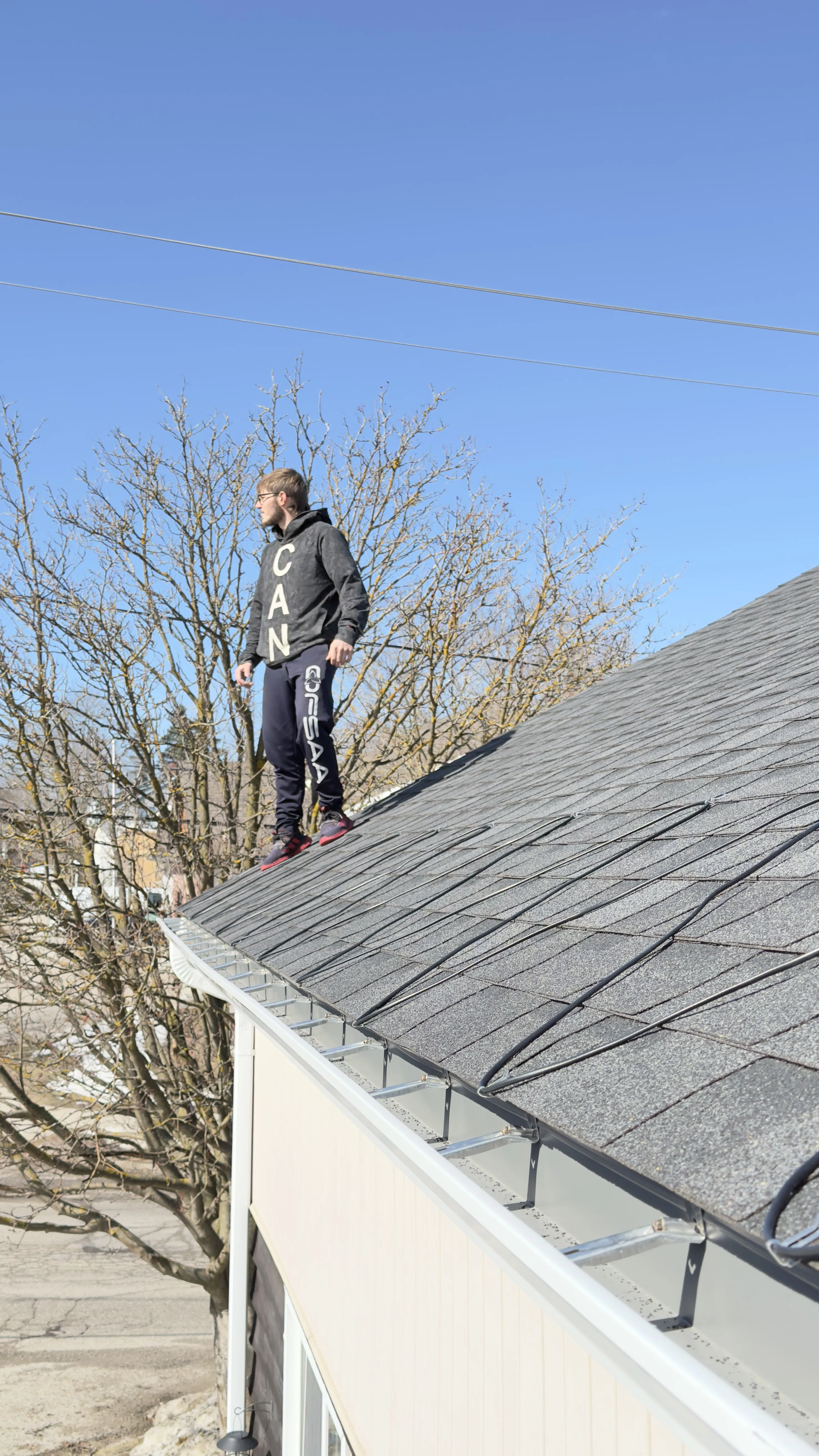
- Add heating cable where the problem repeats. It runs in a zigzag along the roof edge and through the eavestrough and downspouts. It does not melt the whole roof. It keeps a path open for water. Electrical work beyond a plug-in setup should be done by a Licensed Electrical Contractor.
If a dam has already formed, do not chip it. Low-pressure steam cuts channels without hammering the shingles or the gutter. D&D Snow Services offers ice dam removal by steam, and a free written estimate lays out what is included.
Ice dam and gutter questions homeowners ask
Can you get ice dams with gutter guards?
Yes. Guards sit on top of the gutter and do nothing about heat escaping into the attic, which is what melts roof snow. The snow melts, runs to the cold eave and refreezes with or without a guard. Guards can also hide ice in the trough, so check the roof edge as well.
Can you get ice dams without gutters?
Yes. The overhang is still colder than the roof above it, so meltwater refreezes at the edge and water can back up under shingles. Without gutters you tend to see icicles and ice on steps, walkways and the ground at the foundation instead of ice in a trough.
What is the difference between an ice dam and a frozen gutter?
A frozen gutter is ice inside the trough or downspout that blocks drainage. An ice dam is a ridge of ice on the roof edge that traps meltwater behind it. They can happen together, and a frozen gutter can add to a dam. Dams are the bigger risk for water entering the house.
Should I take off my gutter guards in winter to stop ice dams?
No. Removing guards will not fix the heat loss that causes dams, and working at an icy eave is risky. Check the manufacturer's instructions, keep the trough clear, rake the lower roof edge from the ground, and put the effort into air sealing, insulation and ventilation.
Do heating cables stop ice dams?
They reduce the chance of one. Heating cable does not melt the whole roof. It keeps a channel open through the roof edge, eavestrough and downspouts so meltwater can drain instead of refreezing in place. It works best alongside fixes to attic heat loss.
Ready for a Reliable Winter Season?
D&D Snow Services covers Kitchener, Waterloo, Cambridge, Guelph and surrounding region.
Get a Free Snow QuoteKey Takeaways
- Gutter guards do not cause ice dams. Heat loss into the attic does.
- Houses with no gutters still get dams, plus icicles and ice at the foundation.
- A frozen gutter is ice in the trough. An ice dam is a ridge on the roof edge.
- Guards can hide ice and make it harder to clear, so check the roof edge as well.
- Seal and insulate the attic, rake the lower roof edge, and use heating cable where problems repeat.
Sources & References
Request snow-service details
Identify the clearing areas, access priorities and seasonal or per-visit needs.
Prefer to send the details first? Request a quote or call (519) 501-5003.