Best ice melt for new concrete in its first winter: none. Shovel early and use clean sand for traction, and keep salt and other de-icers off the slab until it has been through a full winter. Young concrete holds more moisture and has less strength, so salt and freeze-thaw cycles scale the surface faster. After that, use small amounts and read the label.
Best ice melt for new concrete: usually none
The concrete industry's own advice is plain. The National Ready Mixed Concrete Association (NRMCA) tells owners to avoid de-icing chemicals in the first winter and to use clean sand for traction instead. It also lists heavy de-icer use on newly placed concrete as one of the main causes of surface scaling, the flaking away of the finished top layer.
Here is the logic. Scaling happens when a slab is saturated with water and goes through freeze-thaw cycles. De-icers make it worse because they keep the surface wetter and cause more freezing and thawing cycles. New concrete is also still drying out and gaining strength. A National Research Council Canada building digest says the maturity of concrete when it first meets frost is critical, and that air-drying after curing is essential where de-icing salts are likely.
That last point matters in Ontario because of when slabs get poured. A driveway finished in June has had a summer to cure and dry. One finished in late October has had almost none, which makes the first winter its hardest test. The NRMCA also cautions against placing exterior concrete in late fall, when it may freeze while still saturated.
How long to wait before using de-icer on a new concrete driveway
The guidance is tied to the winter, not to a number of days. Treat the whole first winter after the pour as no-salt, whatever the calendar says. After that, use de-icers sparingly. The NRMCA says to apply them in moderate amounts, since heavy applications raise the chance of scaling.
Your installer may give a different timeline for your mix, so ask. These four questions are worth a quick call or email:
- Was the concrete air-entrained? Tiny air bubbles give expanding ice somewhere to go. The NRC digest says air-entrainment should be required for exposed concrete.
- How was it cured? Good curing makes a stronger, denser surface that resists frost better.
- Should it be sealed, and when? A breathable sealer is a common protection, but the slab should be reasonably dry first. Late summer with a few dry days beforehand is the NRMCA's idea of good timing. Follow the sealer maker's instructions.
- What do they want used this winter? Get it in writing so everyone who clears the driveway follows the same rule.
Sealing does not cancel the first-winter rule. It slows water and salt from getting in, but it does not make a young slab immune.
What to use on new concrete in the first winter
Without a de-icer, three habits do most of the work.
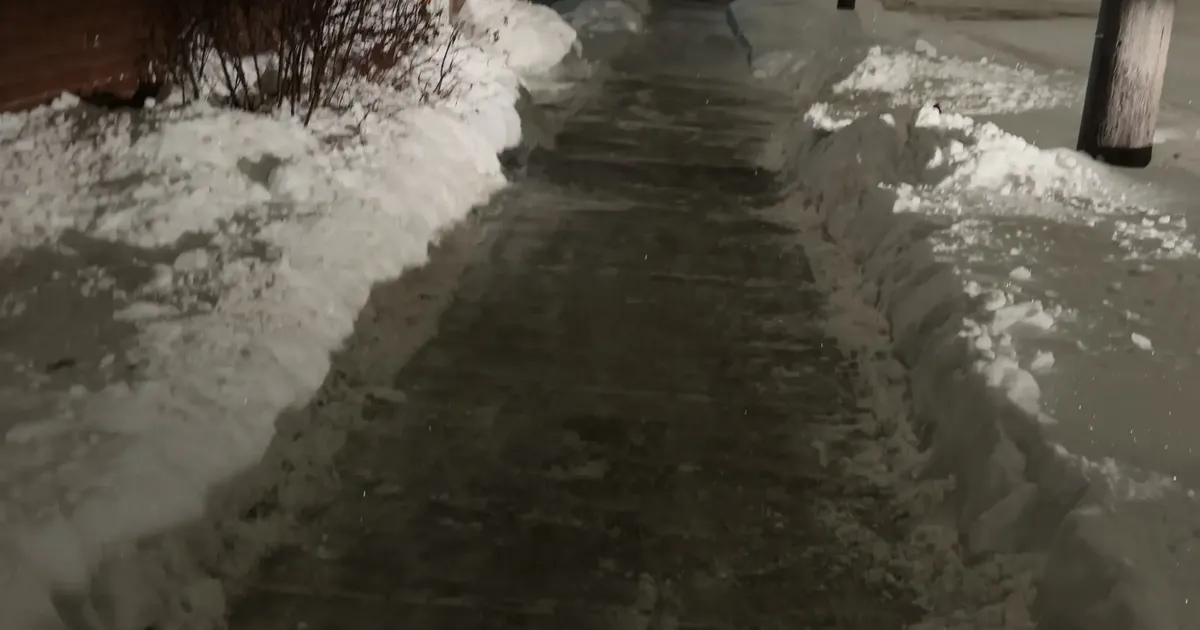
- Shovel early and completely. Snow that gets packed down by tires turns to ice, and ice is what tempts people to reach for salt. The Region of Waterloo advises shovelling or plowing as soon as you can, before snow packs down into ice. A plastic or rubber-edged blade is gentler on a new surface than bare steel.
- Add traction, not chemicals. Clean sand or fine grit gives grip without melting anything. Spread a thin layer on the slippery spots only. Our comparison of salt versus sand on Ontario driveways covers the trade-offs, including spring clean-up.
- Keep water moving off the slab. The NRMCA notes that poor drainage lets salty water pool on concrete, which makes exposure worse. Check that downspouts and roof runoff do not discharge onto the driveway, and pile snow on lawn, not on the new slab.
Cold snaps do not change the answer. The Region of Waterloo says that below -10°C salt does not work anyway, and recommends sand in that range. For a new slab, sand is the right tool at every temperature.
One more source of salt is your own car. Road slush melts off vehicles onto the driveway and garage floor. The NRMCA suggests hosing salt deposits off driveways when conditions allow, which is easy in a mild afternoon and pointless in a deep freeze.
Which de-icers concrete experts say to avoid
After the first winter, not every product is equally safe for concrete. This table summarises the NRMCA's guidance and the NRC digest. The right-hand column is the rule for new concrete.
| Product type | Concrete industry view | First winter |
|---|---|---|
| Rock salt (sodium chloride) | Considered acceptable on concrete in moderate amounts | Skip it |
| Calcium chloride | Considered acceptable in moderate amounts | Skip it |
| Magnesium-based salts | NRMCA says never use them as a de-icer on concrete | Skip it |
| Ammonium sulfate or ammonium nitrate (some fertilizer-type products) | NRMCA says never use them; they attack concrete | Skip it |
| Alcohol, glycol or urea | The NRC digest notes they aggravate scaling in a similar way to salts | Skip them |
| Clean sand or grit | No chemical effect; adds traction only | Use it |
Marketing words like "concrete safe" or "gentle" are not a standard. Check the ingredient list on the bag, and if it names a magnesium or ammonium compound, hold off on new concrete. A product that is acceptable on a ten-year-old driveway can still be a bad idea on a six-month-old one.
Best ice melt for a new asphalt driveway
New asphalt is a different story. It does not scale from freeze-thaw and salt in the way concrete does, and chloride de-icers are generally less of a worry on it. Check with your paving contractor, because mixes and sealers vary.
The first-winter risk for asphalt is more often mechanical. New asphalt can still be tender in its first season, and a steel blade, a snowblower scraper set too low or a plow edge can scuff or gouge it and tear its edges. Set the blower's skid shoes so the scraper rides a little above the surface, and ask any plow operator to use shoes or a protective edge. Our guide to de-icing asphalt driveways goes into more detail.
Whatever the surface, the same salt habits hold: spread only on bare ice, use only what you need, and sweep up any extra rather than letting it sit.
After the first winter, and when to call a pro
From year two on, switch to a light touch. For ordinary rock salt, the Region of Waterloo's rule of thumb is that a few tablespoons per square metre is often all you need. Apply it to ice, not to snow, and shovel first. Seal in late summer if your installer recommends it. Our post on how salt damages concrete driveways explains the wear to watch for, such as flaking patches and exposed stone.
If you pay someone to clear snow, the first-winter rule needs to be said out loud. A crew that salts every visit by habit will undo your care. The written terms of a plowing and salting agreement set out the areas cleared, what is salted and any exclusions, so a note that the new slab gets sand or no treatment belongs in there. D&D's plowing and salting service works from that written scope, and the estimate is free.
Also mark any new slab and its edges before snow falls, so a plow or blower does not catch them under the snow.
New concrete and de-icer questions
Is driveway salt bad for concrete?
It can be. Salt keeps the surface wet and adds freeze-thaw cycles, which can flake the top layer, an effect called scaling. Well-made, air-entrained, cured concrete handles moderate use far better than a young slab does. Use the least you can, shovel first, and avoid de-icers altogether in the first winter.
How long should I wait to use de-icer on a new concrete driveway?
Skip chemical de-icers for the entire first winter after the pour. After that, use them in moderate amounts only. A slab poured in late fall is the most vulnerable because it has had little time to cure and dry. Ask your installer whether they want a longer wait for your mix.
Does sealing a new concrete driveway mean I can use salt on it?
No. A breathable sealer helps keep water and salt out, but it does not make young concrete immune, and concrete should be reasonably dry before it is sealed. Treat sealing as extra protection, not permission. Keep to sand and shovelling in year one, then follow the sealer maker's instructions.
What is the best driveway salt for asphalt?
Asphalt is generally more tolerant of chloride de-icers than concrete, so ordinary rock salt used lightly is common. The bigger first-winter risk is blade damage to soft new asphalt. Use a protective edge, keep the amount of salt low, and check with your paving contractor about their advice for your mix.
Ready for a Reliable Winter Season?
D&D Snow Services covers Kitchener, Waterloo, Cambridge, Guelph and surrounding region.
Get a Free Snow QuoteKey Takeaways
- For new concrete, the safest de-icer in the first winter is none. Shovel early and use clean sand for traction.
- Late-fall pours are the most vulnerable because the slab has had little time to cure and dry.
- After the first winter, use de-icers in small amounts and check the label for magnesium or ammonium compounds.
- Sealing helps, but it does not cancel the first-winter rule.
- New asphalt is more at risk from blades and scrapers than from salt, so protect the surface when plowing.
Sources & References
Request snow-service details
Identify the clearing areas, access priorities and seasonal or per-visit needs.
Prefer to send the details first? Request a quote or call (519) 501-5003.