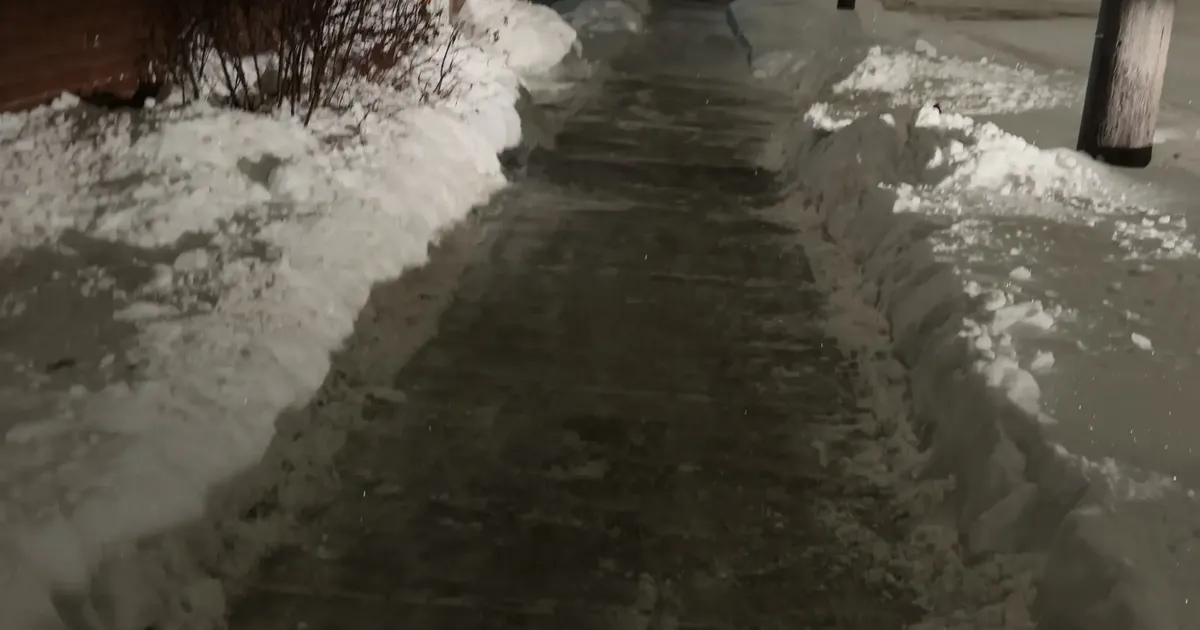
Start with less ice to treat
Plan prompt physical removal and inspect the water sources that repeatedly refreeze. A blocked flow path or snow pile crossing an entrance can create demand for another application regardless of the brand of deicer.
Define the required winter routes. If an optional area can be taken out of use, assess that decision with the property manager and keep necessary access available. Reducing maintained area is not appropriate when it forces people onto an unsafe or inaccessible route.
Environmental and Surface Considerations
Read the ingredients and technical information. Region of Waterloo: Groundwater stories cautions that many products carrying natural or environmentally friendly claims still use salt. Calcium and magnesium chlorides remain chloride products; changing the cation does not make the runoff chloride-free.
Check pavement and finish restrictions alongside environmental claims. A material selected to reduce one impact may be unsuitable for a concrete repair, coating or nearby metalwork. Ask the supplier for evidence relevant to the actual surface.
Compare alternatives by what they do
- Physical removal: reduces the accumulation that remains to be treated; equipment and timing must fit the site.
- Sand or another suitable abrasive: provides traction while ice remains and needs follow-up and cleanup.
- Chloride blends or treated salts: require review of ingredients, use rate and actual performance rather than colour or marketing language.
- Non-chloride formulations: such as acetate-based products need their own surface, handling and environmental assessment.
- Organic additives: do not establish a chloride-free product and can introduce other runoff concerns.
University of Minnesota Extension: Deicing salts and landscapes discusses tradeoffs, including oxygen-demand concerns for sugar-containing additives. The relevant question is what reaches the receiving environment at the intended application, not whether the name sounds agricultural.
Compare a proposed product on the same basis
Ask for the product identity, recommended use conditions, application instructions, surface exclusions and safety information. Compare the amount needed for the same measured area and service objective.
For a trial, agree in advance which location will be observed, who checks the result and when the approach will be reconsidered. Do not turn a hazardous public route into an unattended experiment. Record clearing work and weather as well as product use so a change in conditions is not mistaken for a product benefit.
Price the cleanup and additional work alongside the material. A lower bag price or an attractive environmental label does not describe total maintenance effort.
Choose a reduction plan you can verify
Set a practical objective such as eliminating a recurring spill, improving edge control or correcting a meltwater source. Track the change and its effect on conditions before claiming that it saved a particular percentage of salt.
Ask DDSS about a site-specific deicing scope and provide the surfaces, sensitive areas and existing problems. Request the proposed product information before agreeing to an environmental or material-safety claim.
Frequently Asked Questions
What is the most effective de-icing product for Ontario winters?
An effective option must address the observed ice without ignoring surface and runoff restrictions. There is no universal environmentally harmless deicer, and an ingredient or marketing label alone cannot establish the best choice.
Is de-icing included in my snow removal contract with D&D?
Ask your DDSS contact to identify what is included and which material is proposed. If you want an alternative product assessed, make that request explicit in the quotation rather than assuming it is the standard treatment.
Key Takeaways
- Reduce recurring ice and unnecessary applications before switching products.
- Check ingredients; natural or green does not mean chloride-free.
- Compare surface compatibility, cleanup and runoff tradeoffs.
Sources & References

Include a preferred date and time
Request snow-service details
Identify the clearing areas, access priorities and seasonal or per-visit needs.
Prefer to send the details first? Request a quote or call (519) 501-5003.