Pre-Treatment (Anti-Icing): Before the Storm
Identify what will arrive first: rain, snow or a mix. A suitable treatment before bonding develops can assist later removal, but rain may wash an early treatment away. Confirm the surface condition, product and application method before dispatching a pretreatment visit.
Do not use “a few hours before” as a rule by itself. Record why that window was selected and when the forecast will be checked again.
During the Storm: Keeping Surfaces Workable
Pair any in-storm treatment with physical clearing. A salting pass cannot substitute for removing ongoing accumulation. Watch for traffic packing snow at turning points, entrances and the route from parked cars.
Define who decides on another clearing pass and how an occupied area will be accessed. Avoid sending pedestrians through an active work area just because one section has received product.
Post-Clearing: The Critical Touch-Up
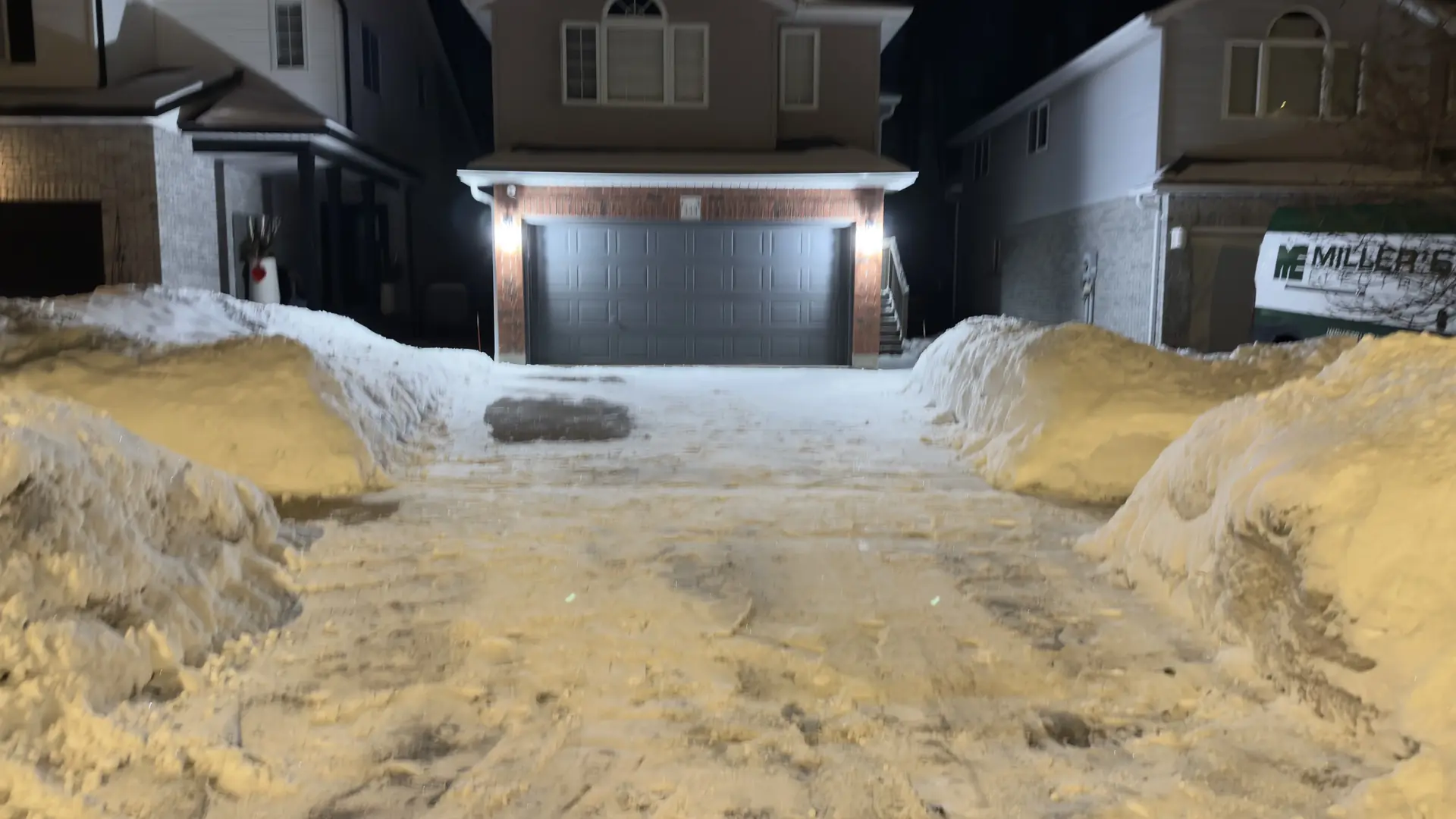
Inspect before applying. Is the exposed surface dry, wet, still icy or coated in slush? Treat residual ice or a relevant refreeze risk according to the product instructions, then remove loosened material. Clear, dry pavement does not need an automatic “touch-up.”
Note whether water is still arriving from a snowbank or outlet. Without that observation, another application can hide the cause only briefly.
Early-Morning Re-Checks
Use opening and travel times to schedule a check. Include evenings, overnight shifts and weekend use when relevant; 6–7 a.m. is not a universal safety deadline.
A useful inspection record describes which routes were checked and what was found. “Visited property” is less informative than an observation of the entrance, shaded ramp and garage approach.
Match the Product to the Temperature
Use pavement readings and their trend alongside the forecast. The product's instructions must fit the conditions where it is being applied. A low advertised operating temperature does not establish that the treated surface is ready for traffic.
Do not rely on a fixed rock-salt/calcium/magnesium temperature ladder. If melting is too slow, reconsider clearing, the product and temporary access arrangements rather than repeatedly increasing the dose.
Timing for Freezing Rain and Ice Pellets
Freezing rain can rapidly change a surface and dilute a treatment. The archived FHWA: Anti-icing manual, operational guidance specifically cautions against relying on liquid treatment during freezing-rain and sleet events. It does not support a promise that brine will keep a walkway clear through an ice storm.
Plan who monitors the property, who can call for additional work and how people will be directed if a route becomes unsafe. Do not wait for the end of a booked visit interval to report a developing hazard.
Adjust Timing for Different Surfaces
Check exposed ramps, shaded steps and sunny pavement separately. Surface colour alone does not determine the order in which every area will freeze. Check surface temperature and moisture instead of assuming concrete always refreezes before asphalt.
Prioritize inspection at stairs, ramps and entrances; priority does not mean an automatically heavier salt dose. Confirm the surface-care requirements at each location.
Apply the Right Amount — More Isn't Better
Follow the actual product directions, measured area and equipment settings. Do not use a coffee mug or the sound of granules as proof of a correct application. Record the product and quantity so the result can be compared with the condition found on the next check.
Before the next storm, assign the forecast check, clearing authorization and post-treatment inspection to named people. Send a contractor those responsibilities and property opening times when requesting a timing plan.
Key Takeaways for Kitchener-Waterloo Property Owners
- Choose timing from the precipitation sequence and observed pavement.
- Inspect after clearing instead of automatically applying another dose.
- Freezing rain needs active reassessment and an access contingency.
Sources & References
Want Salting Done Right and On Time?
Describe your property, access priorities and recurring ice, and ask D&D Snow Services to confirm an appropriate service scope.
Get a Salting & De-Icing Quote (519) 501-5003