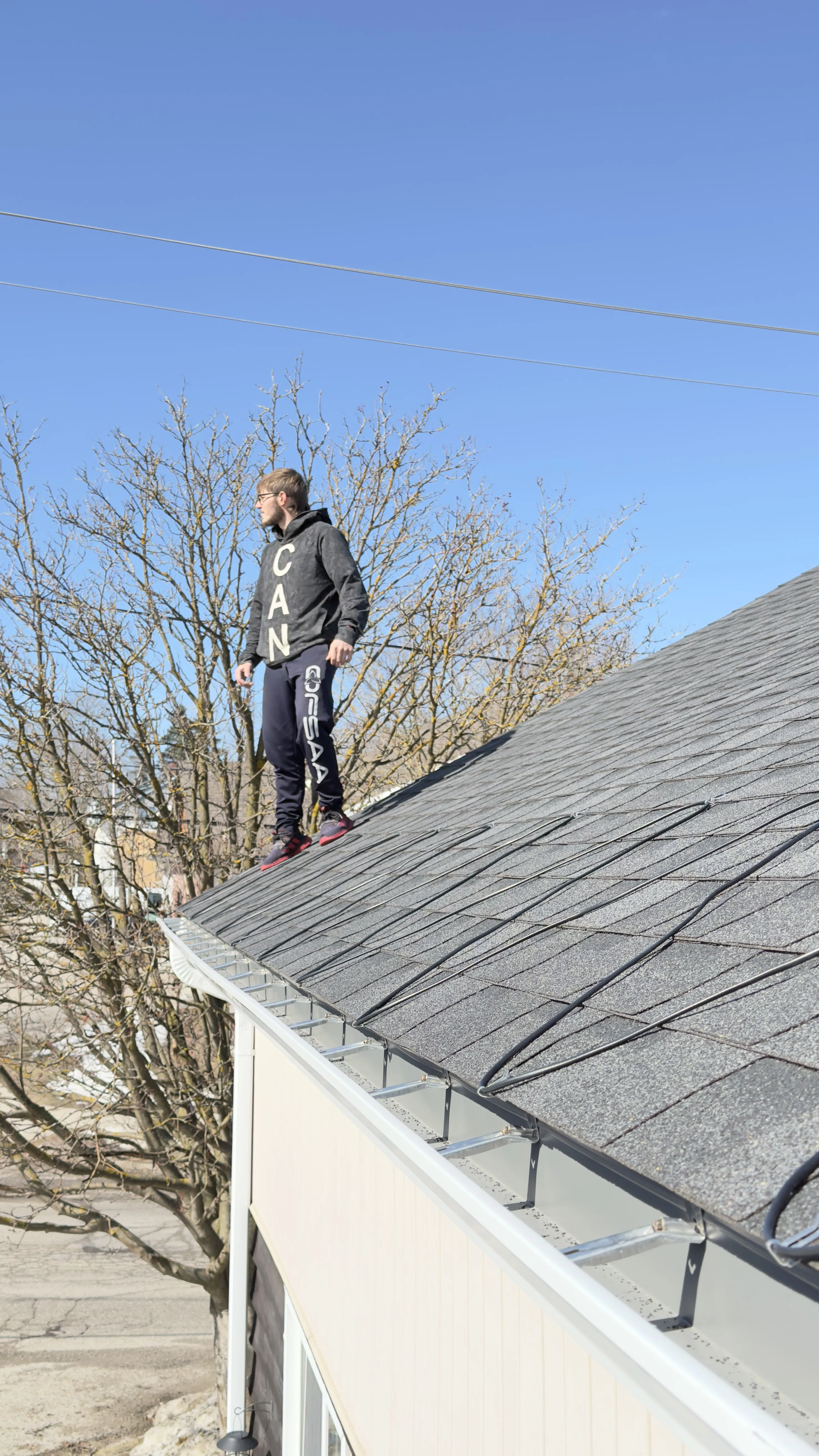






Ice dams and ice control across Cambridge
D&D Snow Services provides ice dam removal in Cambridge, steaming channels through ice at the eave so trapped meltwater can drain without hammering the roof. Ice on steps and walkways is chipped and treated after freezing rain. Work covers Galt, West Galt, East Galt, Preston, Hespeler and Blair, and a free written estimate comes first.
Cambridge was formed in 1973 from Galt, Preston, Hespeler and Blair, where the Grand and Speed rivers meet. Galt grew around river-powered mills and stone buildings, and the Dickson Hill Heritage Conservation District in West Galt holds stately homes from the late 19th and early 20th centuries. Steep, busy roofs from those years hold a lot of snow.
Ice on Cambridge roofs, street by street
Heritage roofs in West Galt
Stately homes from the late 19th and early 20th centuries often have steep pitches, dormers and several valleys. Snow piles up in the valleys, and ice grows where roof planes meet. Steaming reaches those tight spots without prying, which matters when the shingles and trim are older.
Mill-town streets in Preston and Hespeler
Preston and Hespeler began as mill communities, and many older houses there have been added to over time. Mixed roof sections lose heat unevenly, so ice can run along one eave and skip the next. Each edge is worked on its own, and we stop once the water has a clear way off.
Newer homes in Blair and Fiddlesticks
Newer houses have wide roofs, shallow valleys and low eaves over garages. Builder-grade eavestrough can sag, and ice dams form where it does. A quick look at the trough before steaming tells us whether to suggest a repair, or heating cable at the downspout, alongside the removal.
Riverside lots and older stone steps
Lots close to the rivers often have older stone or concrete steps that hold ice. Road salt damages new concrete and lawns, so the treatment is matched to the surface and the temperature. We chip loose ice first, then treat what is left so the step can be used.
Questions to settle before ice work in Cambridge
- Name the roof sections that freeze. Houses with additions or dormers ice in several places. List each one, starting with the sections above doors and walkways.
- Point out the steps and ramps. Show us steps, landings and ramps that are old, cracked or freshly poured. The treatment choice changes with the surface underneath.
- Mark the downspout exits. Water leaving a downspout onto a path or driveway can freeze into a sheet. Mark where each one lands so that ice can be treated too.
- Think about timing. An ice dam is easier to deal with before water reaches the ceiling. If you see damp spots indoors, say so when you ask for the estimate.
What sets the price in Cambridge is the length of eave to steam, roof height and pitch, how busy the roof lines are and whether steps and walkways are added. A free written estimate lays out each item before anything is booked.
Cambridge questions about ice dams and ice removal
What affects the price of clearing an ice dam in Cambridge?
Length of eave to steam, roof height and pitch, the number of valleys and sections, access around the house and any ground-level ice work all play a part. We assess the roof and send a free written estimate that lists each of those items.
How is getting rid of ice dams different from raking the roof?
Raking pulls snow off the lowest part of the roof so less melts and refreezes. It does nothing about ice already formed. Steaming melts channels through the existing dam, so trapped water can drain. The two work well together in a long cold spell.
What is pre-treatment ice control?
Treating a surface before a storm helps ice from bonding to it, so it is easier to clear afterwards. Waiting until ice forms and then melting it is de-icing. For steps and walkways that ice over often, the estimate can state when each approach applies.
Can older heritage-style roofs be steamed?
Low-pressure steam avoids hammering, which is the main risk to older shingles and trim. We look at the roof first and say what we see. If something is loose or worn, we tell you before the work starts, since that is a repair question rather than an ice question.
Will clearing an ice dam stop leaks that have already started?
It stops new water backing up under the shingles, but damage that has already happened, such as wet insulation or stained drywall, still needs attention. Photograph any stains for your records, and arrange repairs separately once the roof edge is clear.