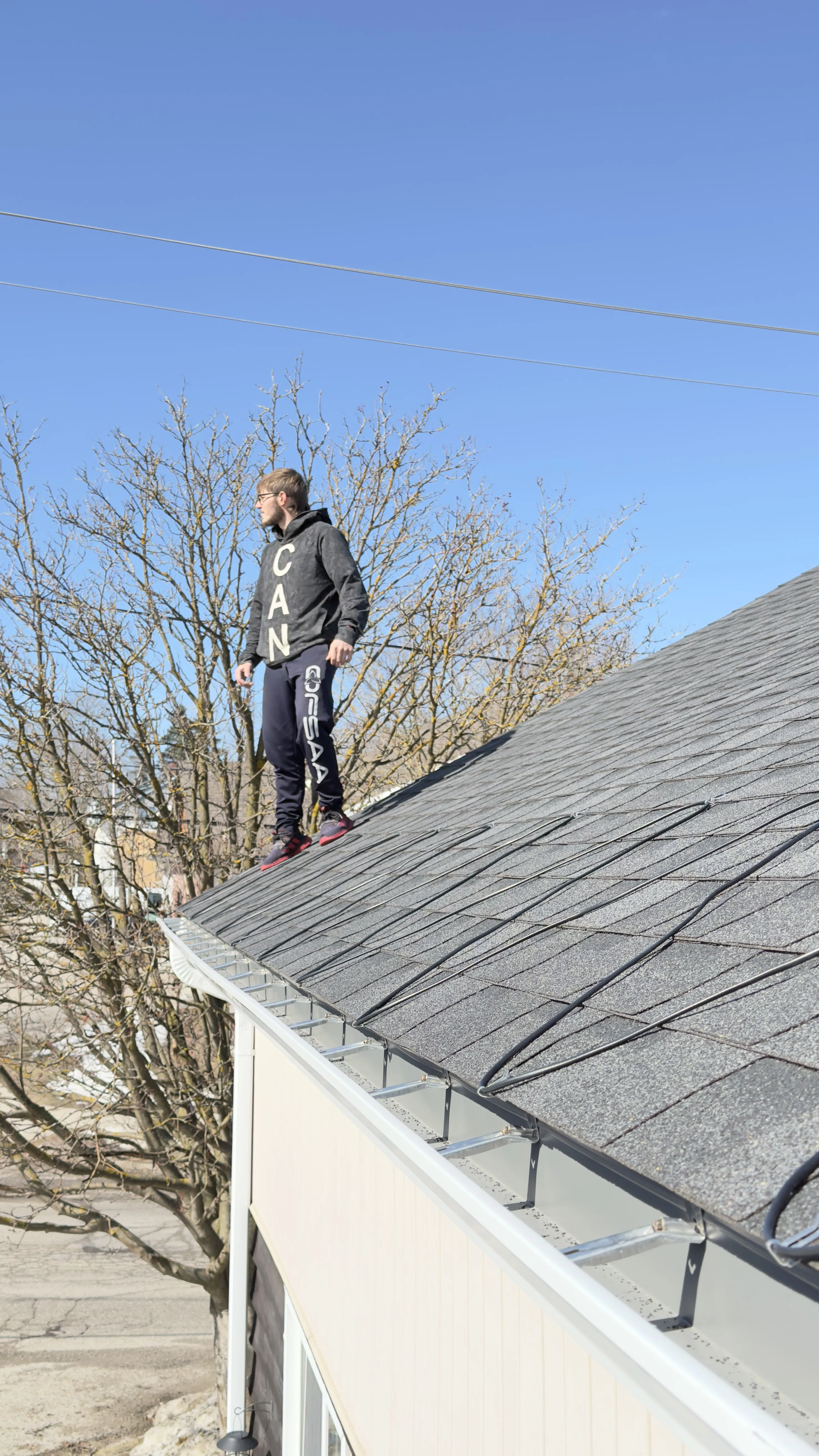






Ice dam and ice removal for Guelph properties
D&D Snow Services offers ice dam removal in Guelph, melting channels through roof ice with low-pressure steam so water stops backing up under the shingles. We also chip and treat ice on steps and walkways. Crews work in Downtown Guelph, Old University, The Ward, Kortright Hills, Westminster Woods and Pine Ridge, and every job starts with a free written estimate.
John Galt laid Guelph out as a European-style town, with broad main streets and narrow side streets in a radial plan that still shapes the blocks. Much of the old city was built from local stone, including Old City Hall, and the Speed River runs through the middle. Tight old lots and newer subdivisions face the same cold eaves.
How ice behaves on Guelph roofs and walkways
Stone and brick near Downtown Guelph
Thick masonry walls hold heat differently from the roof above them, and older houses in The Ward and Old University often have attics that were insulated long after the house was built. Ice at the eave points to heat escaping upward, and getting rid of ice dams for good starts with that leak. We steam the dam and tell you which edge looks like the source.
Narrow lots and close neighbours
The street plan leaves many lots tight, with side passages barely wide enough for a ladder. Access matters on those jobs, so the estimate notes where the crew can stand, what needs moving and how to keep meltwater off a neighbour's path.
South End and newer subdivisions
Kortright Hills, West Willow Woods, Westminster Woods, Pine Ridge and Clairfields have steep gables, front-facing garages and long runs of eavestrough. Builder-grade materials age, and a sagging trough holds water that freezes. If the trough is failing, the dam returns, so we flag it along with the removal.
Steps after freezing rain
Rain that freezes on contact glazes porches, stairs and ramps from Exhibition Park to Grange Hill East. We chip loose ice, treat the surface for grip and note in the written terms what return visits are included.
Before the crew arrives at your Guelph home
- Note the roof lines that ice up. Houses with dormers, additions or stone chimneys can ice in unexpected places. Write down which edge freezes first and where drips appear indoors.
- Free up the narrow side yard. Move bikes, bins and ladders from side passages, and mention shared fences or a neighbour's driveway beside the work area.
- Check the eavestrough. Look for sagging sections and loose hangers from the ground. A trough pulling away from the fascia needs repair before ice removal can help much.
- Tell us which steps matter. List the porch steps, ramp and walkway your household or tenants use every day so the clearing and treatment are written in.
In Guelph the price depends on roof height and pitch, the length of eave that is iced up, how many sections need steam and whether steps or walkways are included. All of it goes into a free written estimate before work begins.
Guelph homeowners ask about ice dams
What does ice dam removal cost in Guelph?
It depends on roof height and pitch, how much eave is iced, how many sections need steam, and whether ground-level ice work is added. There is no flat answer. We look at the roof and send a free written estimate so every item is spelled out.
How is steaming different from chipping an ice dam?
Chipping uses force, and force cracks shingles and bends eavestroughs. Steaming uses low-pressure steam to melt narrow channels, so the water behind the dam can run off and the remaining ice loosens. It is slower, but the roof edge stays in one piece.
Will an ice dam leak into my home?
It can. Water trapped behind the dam finds its way under the shingles, into the attic insulation and then down walls or ceilings. Stains, drips near windows and peeling paint are warning signs. Call early, because wet insulation also stops doing its job.
Does roof snow raking help prevent ice dams?
Raking the lower roof edge leaves less snow to melt and refreeze. It helps, but it does not fix heat loss from the attic. In a heavy snow stretch it is a useful companion to steam removal and better insulation.
Can you treat ice on my steps and path as well?
Yes. We chip loose ice and treat the surface, and the estimate states what is included. Rock salt loses most of its effect below about -10°C, so the choice of treatment depends on how cold it is. Say which surfaces you have, such as concrete or stone.