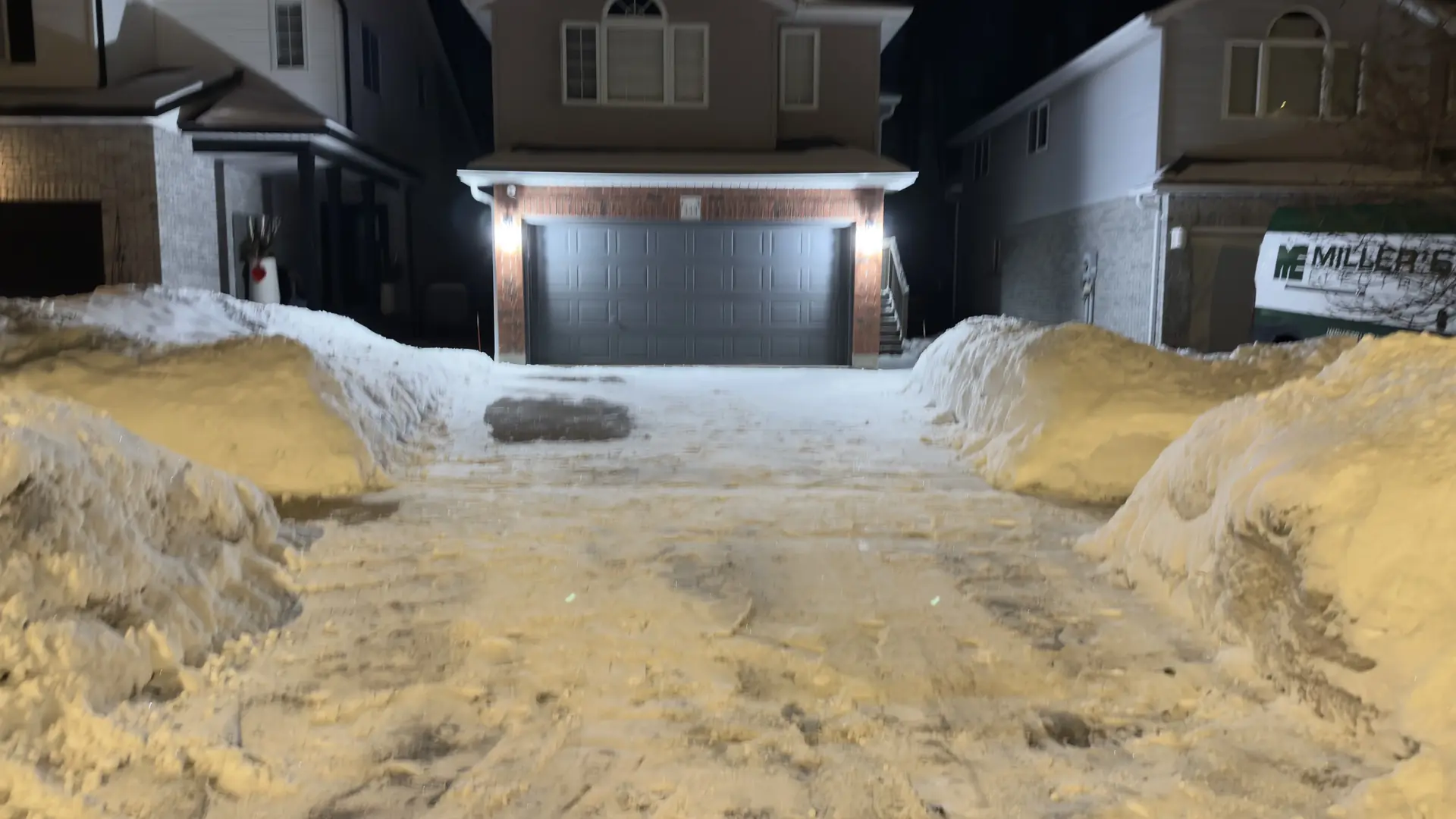
How pretreatment changes the first stage of a storm
Anti-icing places a chemical treatment before a bonded layer has developed. The purpose is to make subsequent clearing more manageable. The useful result is easier separation at the pavement, not the disappearance of a whole snowfall.
Distinguish direct liquid application from spreading a solid product or prewetting solid salt. They require different equipment and product instructions. Ask the applicator to identify which method is proposed rather than accepting “pre-salting” as a complete specification.
When the forecast argues against an early application
The FHWA: Anti-icing manual, operational guidance describes rain wash-off and the short-lived nature of pretreatment benefits. A storm that starts with rain needs a different decision from a snowfall onto a prepared surface. An early visit is poor value if the treatment is removed before it is needed.
Check pavement conditions as the forecast changes. Do not assume a liquid treatment selected for one temperature will remain effective after dilution and cooling. During freezing rain, a brine-only strategy can be overwhelmed; arrange an appropriate response rather than promising that one application will prevent a glaze.
What a useful pretreatment plan includes
- A map of the entrance route, driveway or parking sections to be treated.
- The forecast and observed conditions used to authorize the work.
- The product and surface restrictions, including any recently installed concrete or coatings.
- The clearing visit that follows and a way to report persistent ice.
- A decision-maker who can adjust the plan if precipitation changes.
Keep treatment away from areas that do not need it. The environmental benefit has to come from the amount actually avoided or better placed, not simply from calling a product preventive.
Check whether the benefit was achieved
After the storm, note whether snow separated readily, where compacted areas remained and whether return treatment was necessary. Compare like-for-like observations over time: a light event with little traffic cannot prove savings for a long, wet storm.
Keep the application and clearing records together. A pretreatment receipt alone does not show how the property performed through the rest of the event. Useful feedback includes a photograph of the problem location and the time it was observed.
Ask for a conditional service scope
Ask DDSS whether pretreatment is available for your property, which conditions would cause it to be delayed and how follow-up work is priced. Supply opening times, sensitive surfaces and the areas most likely to receive foot or vehicle traffic.
Choose a plan that explains what happens when conditions change. A promise of less salt on every storm or ice-free pavement after every pretreatment is not a substitute for that decision process.
Frequently Asked Questions
What is the most effective de-icing product for Ontario winters?
For pretreatment, the suitable choice depends on precipitation, pavement conditions and the application method. Do not select a product only by its advertised minimum temperature; ask how it will be checked after rain or fresh accumulation.
Is de-icing included in my snow removal contract with D&D?
Confirm pretreatment separately in the written DDSS scope. Ask whether the price includes later clearing, residual-ice treatment and a return assessment if conditions change.
Key Takeaways
- Pretreatment can assist later clearing when conditions suit it.
- Rain and dilution can undermine an early application.
- Confirm the follow-up response before purchasing pretreatment.
Sources & References

Include a preferred date and time
Request snow-service details
Identify the clearing areas, access priorities and seasonal or per-visit needs.
Prefer to send the details first? Request a quote or call (519) 501-5003.