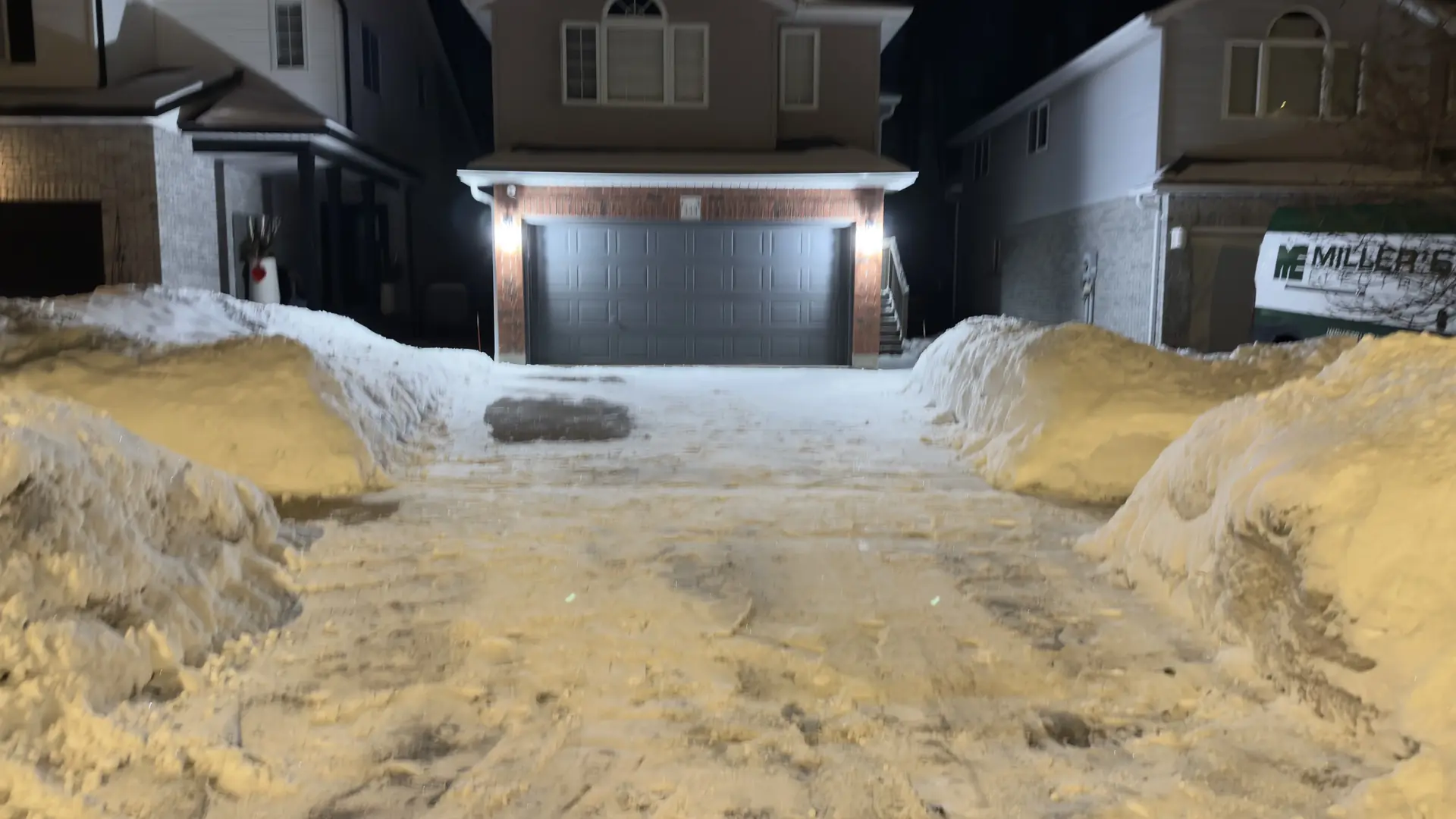
Keep bags and small bins dry and identifiable
Follow the package storage instructions. Keep opened bags closed or use a suitable lidded container with the product label retained. Do not mix leftover products into an unmarked bin: the next user needs to know the ingredients, surface restrictions and application directions.
Place supplies where they can be reached without blocking the entrance. Inspect lids, seams and bag condition after refilling. A scoop stored with a labelled bin is more useful than leaving people to estimate quantities using whatever container is nearby.
Prevent releases from bulk storage
A bulk pile needs a site-specific arrangement for cover, handling and drainage. Environment and Climate Change Canada: Road salts code of practice recommends covered salt and salt-sand piles and controlled handling and runoff for road authorities. Those principles are useful background, but that federal code expressly excludes private, domestic and institutional use; it is not a private-property reporting rule.
Before installing a bulk-storage area, check applicable local environmental and source-water requirements. Region of Waterloo: Winter maintenance for business notes that some properties in wellhead protection areas may need a winter-maintenance risk management plan. Confirm the requirements for the actual site rather than assuming every Ontario property has the same obligation.
Make refilling and spill cleanup part of the routine
Choose a loading location where material can be contained and recovered. Keep the work away from uncontrolled runoff paths where practical. After filling a spreader or bin, inspect the ground and collect spills promptly.
Do not hose loose salt into a catch basin. Use a cleanup method consistent with the product instructions and keep contaminated material separate from usable stock. Ask the local waste service or supplier how to handle material that cannot be reused.
Record who checks the area after a delivery. A covered pile does little to control a spill left outside its cover.
Control access and keep handling instructions available
Keep stored material out of reach of children and pets. Retain the label and safety data sheet where staff can find them, and use the handling precautions specified for the product.
If a bag becomes wet or badly clumped, do not force it through equipment or break it up inside an operating hopper. Isolate it and follow supplier and equipment instructions. Keep emergency access and the route used to carry bags clear of obstructions.
Review stock before the next season
Inventory the product names and usable quantities, inspect the storage area and remove damaged packaging. Check whether the bin location created a spill pattern or interfered with clearing. Decide who orders replacements and how new stock will remain identifiable.
For a contractor-managed site, ask who supplies the material, who owns the bin and who cleans the loading area. Send photos of the proposed storage location when requesting advice. Storage responsibility should be explicit even when salting itself is included in a service agreement.
Frequently Asked Questions
What is the most effective de-icing product for Ontario winters?
Storage does not make one deicer universally most effective. Keep the exact product label and select a suitable material for the surface and conditions; do not lose that information by combining bags in an unmarked bin.
Is de-icing included in my snow removal contract with D&D?
Check the written DDSS scope for both application and material storage. Clarify who supplies stock, checks the bin and removes spills; those responsibilities are not established by this article.
Key Takeaways
- Keep product identity and instructions with stored stock.
- Plan loading-area cleanup and drainage control.
- Confirm site-specific requirements before establishing bulk storage.
Sources & References

Include a preferred date and time
Request snow-service details
Identify the clearing areas, access priorities and seasonal or per-visit needs.
Prefer to send the details first? Request a quote or call (519) 501-5003.