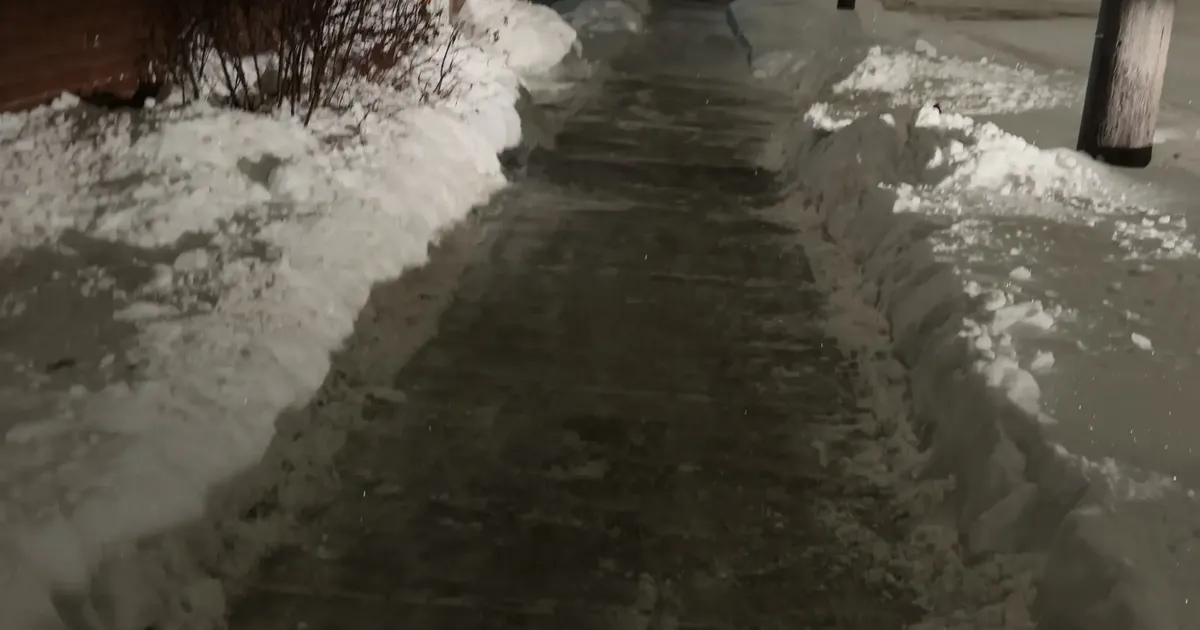
Separate the forecast from the pavement reading
A weather app usually reports air conditions, while the deicer acts on the pavement. Sun, shade, stored heat and exposure can produce different surface conditions around one property. The FHWA: Anti-icing manual, materials and monitoring identifies pavement temperature and whether the surface is wet or dry as important treatment inputs.
Choose repeatable observation points: a shaded entrance, an exposed ramp and an area that receives afternoon sun. Use suitable equipment according to its instructions and record where and how the reading was taken. A reading aimed at snow describes that target rather than bare pavement beneath it.
Write down the time and whether the surface is dry, wet, slushy or icy. A number without its location and condition can be misleading when someone else has to make the follow-up decision.
Read moisture and the temperature trend together
A falling-temperature forecast deserves attention when water is present. Look for meltwater, dripping outlets and remaining slush as well as precipitation. A surface can change after a sunny afternoon even if no new snow is forecast.
Dew point describes atmospheric moisture; a dew point below zero does not itself prove that ice will form on the driveway. Surface cooling and moisture availability matter. US National Weather Service: Dew and frost development explains dew and frost development.
Compare repeated readings rather than relying on a single moment. Mark exposed or elevated locations for separate checks, but do not assume every such surface will freeze first in every event. Observation should confirm the concern.
Keep forecast updates with the inspection record. If precipitation changes from snow to rain, reassess the planned product and timing instead of following an outdated work order.
Turn the observations into a response
- Dry and clear: consider whether a suitable preventive treatment is justified by the forecast; do not apply simply because the air is cold.
- Wet with cooling expected: assess the refreeze risk, product suitability and next inspection time.
- Snow, slush or bonded ice present: identify the clearing or ice-removal work before deciding on chemical treatment.
Give the person monitoring the site a clear escalation contact. If a route remains hazardous, arrange appropriate access controls and further assessment; a thermometer reading is not proof that people can use it safely.
For a contractor enquiry, share opening times, the observation points and the places where ice repeatedly forms. Ask who checks the forecast, who checks the surface and how the next decision is communicated. Confirm the monitoring intervals, dispatch arrangements and follow-up responsibilities for your property.
Ready for a Reliable Winter Season?
Describe the property, clearing areas and timing needs, and confirm current service availability with D&D Snow Services.
Get a Free Snow QuoteKey Takeaways
- Use forecasts to plan inspections and pavement observations to guide treatment.
- Record moisture, location and temperature trend together.
- A subzero dew point alone is not a black-ice diagnosis.
Sources & References

Include a preferred date and time
Request snow-service details
Identify the clearing areas, access priorities and seasonal or per-visit needs.
Prefer to send the details first? Request a quote or call (519) 501-5003.