De-Icing Product Types for Ontario Conditions
Choose the product using the pavement condition and its labelled instructions. Practical melting performance varies with the formulation, pavement temperature, moisture and application conditions. Rock salt, calcium chloride and magnesium chloride also have different material-care restrictions.
Sand is an abrasive option for traction while ice remains. It is not a deicer. Keep the packages identifiable so nobody assumes that a bag used on the asphalt driveway is suitable for the concrete step beside it.
When to Apply De-Icing Products in Ontario
- Before a forecast event: consider a suitable anti-icing treatment only after checking the precipitation sequence and surface. Rain can remove an early application.
- During accumulation: keep up with clearing where it can be done safely. Do not try to melt the entire snow depth with salt.
- After clearing: inspect for remaining ice and wet areas that may refreeze. Treat the affected area as directed.
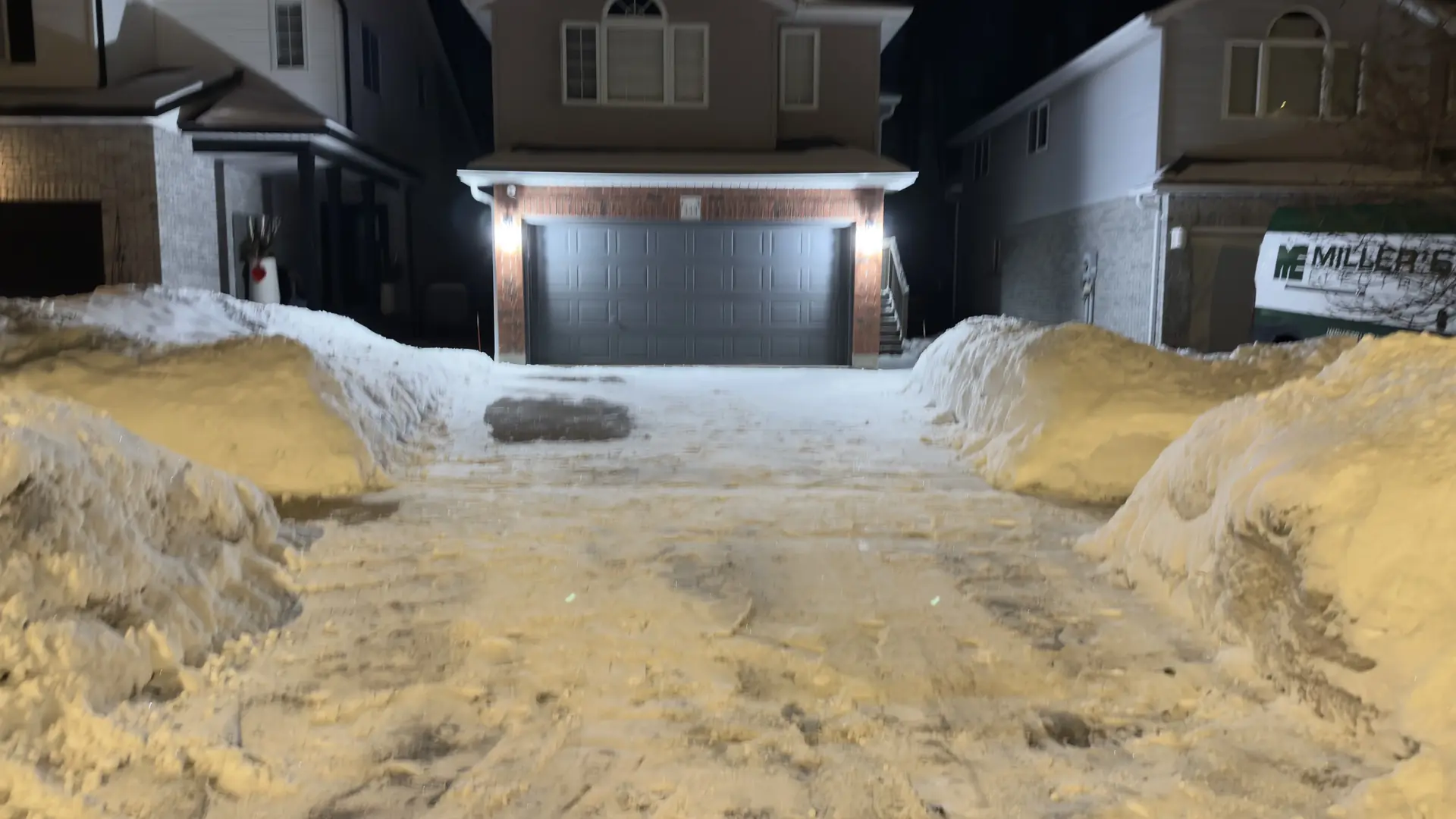
- Before the driveway is used again: check shaded patches, the garage approach and water crossing from snow piles.
Set checks around your actual departure and arrival times. The appropriate time might be before an early shift or after an evening thaw; a universal 6–7 a.m. schedule misses many households.
Eco-Friendly De-Icing for Ontario Properties
Reducing unnecessary treatment starts with removing snow and addressing repeat wet spots. Switching the name on the bag does not automatically solve runoff concerns. Region of Waterloo: Groundwater stories cautions that many products promoted as natural or environmentally friendly still use salt.
When conditions become dry, collect surplus granules instead of leaving them for the next rain. Do not wash them into the street. Store usable recovered material separately from debris and follow the product's storage instructions.
Pet-Safe De-Icing in Ontario
“Pet-friendly” is not permission for ingestion. Keep the bag inaccessible and wipe residue from paws after a treated walk. If exposure or symptoms concern you, contact a veterinarian with the product information; ASPCA Animal Poison Control: Dangers of ice melts gives this precaution. No boot or paw product makes every exposure harmless.
Include the pet route in your driveway plan, particularly where it crosses the salting area. Use the product as labelled rather than creating an untested mixture at home.
Correct Application Rates
Use the instructions for the actual product and the measured treatment area. Coffee mugs vary in size and product density; crunching underfoot is not a calibration method. An application rate should describe the surface and conditions it is intended for.
For the next event, put a small note with your supplies: product, driveway zones, who checks before use and when to reassess. If the same patch refreezes, photograph its water source and ask for clearing or drainage advice. That is more useful than repeatedly spreading across the whole driveway.
Key Takeaways for Kitchener-Waterloo Property Owners
- Use observed ice, refreeze risk and product instructions to decide timing.
- Schedule checks around when the driveway will be used.
- Measure the area; do not dose by crunching sounds or a generic mug rule.
Sources & References
Need Snow Removal in Kitchener-Waterloo?
Describe your property, access priorities and recurring ice, and ask D&D Snow Services to confirm an appropriate service scope.
Get Free Snow Quote (519) 501-5003